Custom CRM Your Way
Understanding CRM – The Heart of Customer Success
CRM, or Customer Relationship Management, is more than just software, it’s a strategy designed to manage and improve how businesses interact with customers. It helps companies streamline communication, organize data, and deliver personalized experiences, ultimately boosting satisfaction and long-term loyalty.
In today’s dynamic digital landscape, relying on one-size-fits-all solutions is no longer enough to manage customer relationships effectively. Every business operates with its own unique workflows, objectives, and challenges, which is why Custom CRM Development has emerged as a true differentiator. Rather than forcing your operations to adjust to generic software, a custom-built CRM is designed around your specific needs. This ensures not only greater efficiency, but also deeper, more personalized connections with your customers.
A powerful custom CRM goes far beyond simple data management. It becomes the backbone of collaboration across your teams, streamlines routine processes through automation, and provides actionable insights for smarter decision-making. With features like real-time analytics, predictive intelligence, and AI-driven recommendations, a tailored CRM empowers businesses to optimize performance, accelerate revenue growth, and deliver superior customer experiences. At Inventiv Technology, we see the right CRM not just as a system but as a strategic growth engine driving long-term business success.

Why Custom CRM Matters in 2025
Customer Relationship Management (CRM) systems have become the backbone of modern businesses. However, “one-size-fits-all” solutions no longer work for companies with unique workflows.
- Tailored Solutions – Custom CRMs are built around your specific needs, not the other way around.
- Scalable & Future-Ready – As your business grows, your CRM grows with you.
- AI & Automation – From predictive analytics to automated workflows, your CRM becomes smarter.
- Seamless Integration – Connects smoothly with your existing tools and databases.
💡 Fun Fact: The CRM market is expected to reach a staggering $298 billion in 2025 – and custom CRMs are driving this growth.
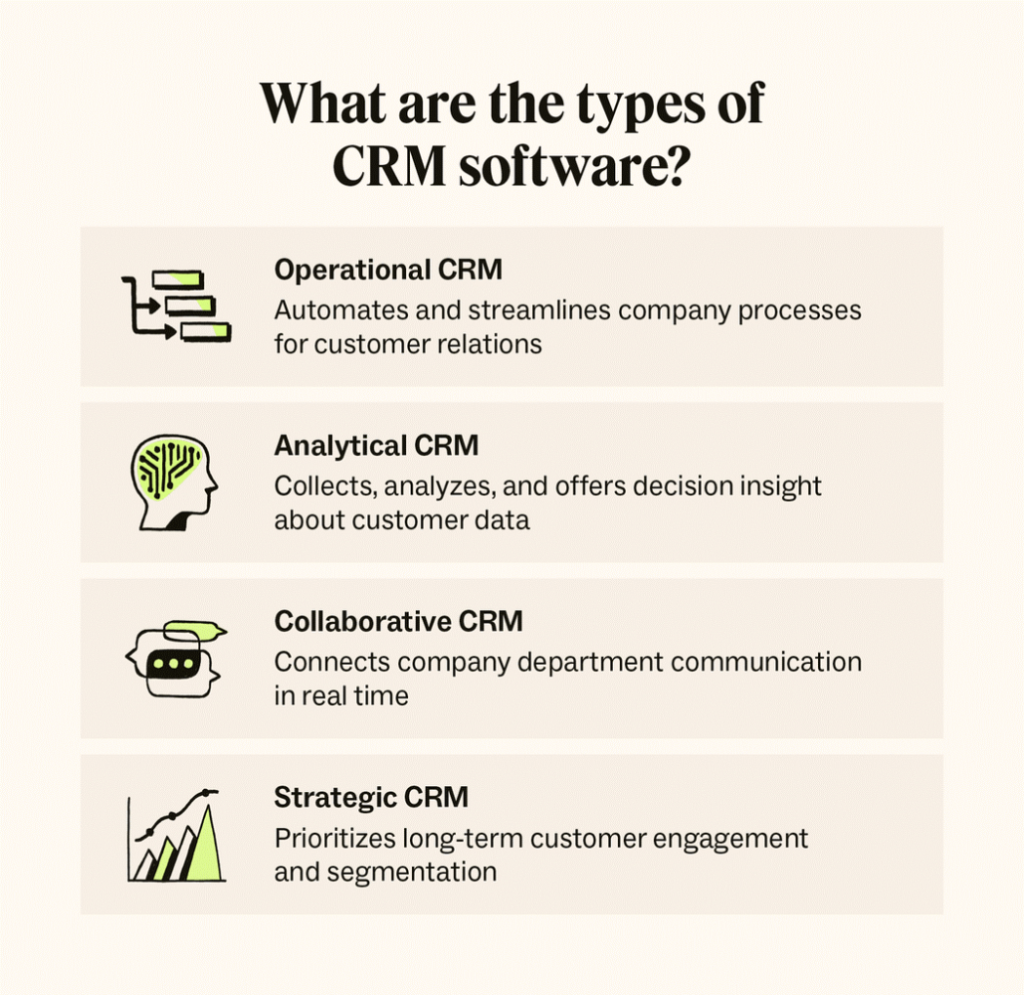
Discover the Key Types of CRM Software for Your Business Growth
Customer relationships are the heart of every successful business. But managing them effectively requires the right CRM (Customer Relationship Management) system. Here are the four major types you should know about:
- Operational CRM – Simplifies and automates daily tasks like sales, marketing, and customer service, ensuring smoother customer interactions.
- Analytical CRM – Turns raw customer data into meaningful insights, helping businesses make smarter decisions based on customer behavior and trends.
- Collaborative CRM – Breaks down silos by connecting different departments (sales, support, marketing) in real time for seamless communication.
- Strategic CRM – Focuses on long-term engagement and customer loyalty by segmenting audiences and building lasting relationships.
👉 Choosing the right CRM type for your business can boostefficiency, strengthen customer loyalty, and drive long-term success.

CRM Software Modules
The following modules are the building blocks of your custom CRM software, and here’s what you can expect from your:
- Contact management module: It’s like your personal address book, but supercharged. It helps you store and organize all your customer and lead information in one place, so you can quickly find and update details whenever you need to.
- Sales management module: This tracks your sales pipeline, manages deals, and helps you forecast future sales, giving you a clear view of your sales performance and where to focus your efforts.
- Marketing automation module: This is your digital “assistant,” automating tasks like email campaigns, social media posts, and lead nurturing. It helps you stay in touch with your audience without spending all day on repetitive tasks.
- Customer service module: Your support hub, managing customer inquiries, tickets, and feedback. It ensures you can provide timely and effective service, keeping your customers happy and loyal.
- Task and activity management module: Your to-do list on steroids. It helps you manage tasks, appointments, and follow-ups, ensuring nothing falls through the cracks.
- Document management module: Your digital filing cabinet, storing and organizing important documents like contracts, proposals, and invoices, making them easy to access and share.
With a custom CRM that’s built around these essential components, you’ll have everything you need to manage your workflows and operations.

Benefits & Key Features of Custom CRM Development
Custom CRM development goes beyond just managing customer data, it empowers organizations to optimize operations, enhance customer experiences, and scale seamlessly with business growth. By combining the benefits and key features of CRM software into one complete solution, businesses can unlock long-term value.
- Complete Customization
Unlike off-the-shelf CRMs that force you to adapt, a custom CRM adapts to your exact workflows, processes, and goals. Whether it’s unique sales stages, specific data fields, or advanced reporting, everything can be tailored to your business.
- Robust Contact Management
A custom CRM centralizes all your customer and prospect information in one secure place. From storing personal details and communication history to tracking preferences and engagement, robust contact management ensures you always have the right context at the right time.
- Seamless Integrations
Custom CRMs integrate effortlessly with the tools you already use — from accounting and ERP software to marketing automation platforms. This eliminates duplicate data entry and keeps all systems in sync, including niche or industry-specific apps.
- Scalability & Flexibility
As your business grows, so do your CRM needs. Custom CRMs are built to scale, allowing you to add new features, users, and data storage without migration issues. This ensures long-term adaptability and cost efficiency.
- Productivity & Task Automation
Repetitive tasks are automated, reducing errors and freeing teams to focus on high-value work. Built-in task and reminder management ensures follow-ups never slip through the cracks, boosting overall efficiency.
- Opportunity & Sales Tracking
A well-built CRM helps track every deal, lead, and opportunity. From customer interests to forecasts and close dates, your sales pipeline becomes more transparent and easier to manage.
- Advanced Reporting & Dashboards
Data-driven decisions are made easier with custom dashboards. Businesses can track KPIs, identify trends, measure campaign performance, and monitor customer behavior, all tailored to their priorities.
- Deeper Customer Insights
With all interactions stored in one place, businesses gain a clearer picture of customer needs, behaviors, and engagement patterns. This enables personalization and strengthens long-term loyalty.
- Security & Data Protection
Custom CRMs are designed with robust security measures like encryption, two-factor authentication, IP restrictions, and role-based access. Regular audits ensure sensitive customer data remains safe.
- Ownership & Dedicated Support
Unlike generic CRM vendors, with a custom CRM you own the software. The same developers who build it can maintain, upgrade, and optimize it for years, providing personalized support aligned with your business needs.
Top Methodologies for Custom CRM Implementation
When it comes to custom CRM software, there are a few main methodologies to consider for implementation. The methodology you choose will depend on your business needs, timeline, and budget:
Waterfall
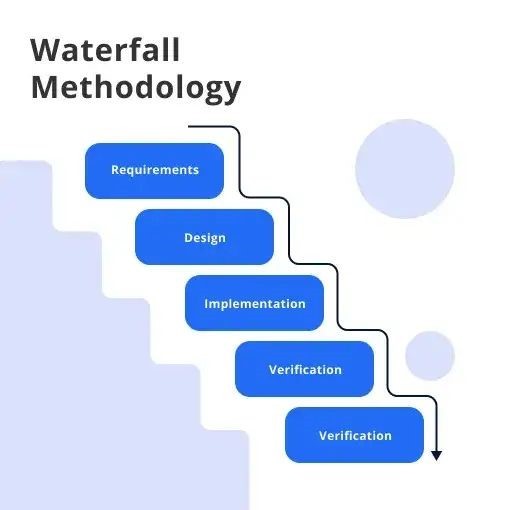
The waterfall methodology follows a linear process, where you finish one phase before moving on to the next. It’s a structured approach, with clearly defined requirements and deliverables for each stage. This works well if you have a fixed scope and timeline. The downside is it can be difficult to make changes once a phase is complete.

Agile
Agile methodologies like Scrum are adaptive, flexible approaches that allow for changes to be made throughout the development cycle. Requirements evolve through collaboration between self-organizing teams.
The overall timeline is broken into smaller chunks, called sprints, where working software is delivered in increments. This works well when requirements are complex or unclear. However, the agile approach may require more time and resources.

Hybrid
A hybrid model combines aspects of waterfall and agile. It provides more flexibility than waterfall, but more structure than pure agile.
For example, you could use an agile approach for developing core features, but a waterfall model for peripheral components with fixed requirements. This balanced approach can provide the benefits of both methodologies.
The methodology you choose depends on factors like:
The clarity of requirements (clearer → waterfall, vague → agile)
Time constraints (tight deadlines → waterfall, flexible → agile)
App complexity (simpler → waterfall, complex → agile)
Your team’s experience (less experienced → waterfall, experienced → agile)
By evaluating your needs and resources, you can determine the custom CRM software development methodology that will set your project up for success. The key is finding the right balance of structure and flexibility for your unique situation.

Integrations to Enhance Your Custom CRM
Connecting your custom CRM solution to other business tools can streamline processes and open up new opportunities. Consider integrating some of the following:

Accounting software
Linking to your accounting platform allows for seamless billing, invoicing, and revenue tracking. Transactions in your CRM can trigger accounting entries automatically. Likewise, invoices sent through your accounting tool can log details in each customer’s CRM profile. Popular options like QuickBooks, Xero, and FreshBooks offer open APIs for integration.

Email marketing
Connecting to an email service like Mailchimp, Constant Contact, or Drip lets you easily send newsletters, promotions, and updates to your contacts and customers. You can trigger emails based on actions or inactivity in your CRM. This integration also logs email opens and clicks within each contact record so you know how engaged your audience is.

Live chat
Adding live chat to your CRM gives you another channel to connect with website visitors and provide instant support to customers. When a chat is initiated, you’ll see the visitor’s information from your CRM so you know their purchase and support history. You can also log details from the chat conversation in their CRM profile. Many chat services like Drift, Intercom, and Zendesk offer CRM integrations.

Project management
Linking to platforms like Asana, Trello, or Jira enables you to keep projects, tasks, and deadlines organized across your teams. As work is completed, details are logged in your CRM against the relevant customer accounts and contacts. Your teams get a single source of truth for all client work, communication, and billing.
Integrating other tools with your custom CRM solution helps break down data silos and gives your whole organization a view of your customers and business. The right integrations can:
Save time;
Reduce errors;
Uncover insights;
Improve customer experience.
With an open API, the possibilities for enhancing your CRM are endless.

Top Industries Benefiting from Custom CRM Development
Custom CRM solutions are not limited to a single sector — they are designed to adapt to the unique processes and requirements of diverse industries. From improving customer engagement to streamlining operations, custom CRMs are transforming the way businesses work across the globe.
· Healthcare 🏥 – Patient record management, appointment scheduling, and secure data handling integrated with billing and telemedicine.
· Finance & Banking 💳 – Portfolio tracking, loan management, compliance monitoring, and improved client communication.
· Real Estate 🏡 – Property listings, automated follow-ups, sales tracking, and long-term client relationship management.
· Retail & E-commerce 🛍️ – Customer loyalty programs, personalized recommendations, order tracking, and POS integration.
· Logistics & Transportation 🚚 – Real-time shipment tracking, automated invoicing, fleet monitoring, and delivery optimization.
· Education 🎓 – Admissions, student records, class scheduling, alumni engagement, and parent communication.
· Hospitality & Travel ✈️ – Reservation management, loyalty programs, guest profiles, and tailored offers.
· Manufacturing ⚙️ – Supply chain management, vendor tracking, production orders, and after-sales support.
· IT & SaaS 💻 – Lead management, project tracking, client onboarding, and helpdesk integration.
· Telecommunications 📱 – Subscription management, billing, query resolution, and churn reduction through personalized offers.
✨ No matter the industry, a Custom CRM ensures that businesses can manage customer relationships more effectively, reduce inefficiencies, and create personalized experiences that boost growth.

Ongoing Support and Maintenance
Once your custom CRM software is built and launched, ongoing support and maintenance are critical to its long-term success. As with any technology system, issues may arise that require troubleshooting, features may need updating, and the platforms it integrates with may change – all of which will require the expertise of skilled developers.
- Provide quality support
After going live, be prepared to field questions from users and address any problems that come up. Your CRM team should offer different support options.
- Email and phone support for timely responses
Online knowledge bases with helpful articles, how-tos and FAQs.
Chatbots or live chat for quick answers.
Fast, friendly support will keep your users happy and engaged with the CRM.
Regular maintenance and updates.
Technology is always evolving, and your CRM should evolve with it. Plan on scheduling regular maintenance, patches, and updates.
- Ensure optimal performance and security
Roll out new features and enhancements Update integrations with other platforms
Apply updates to third-party software components
Your CRM developers will need to stay up-to-date with the latest languages, frameworks, and trends to keep your system modern. Updates should be thoroughly tested before deployment to avoid disruption.
- Optimization
Over time, you’ll gain valuable insights into how your users interact with the CRM. Work with your developers to make optimizations that:
Improve the user experience based on feedback.
Streamline workflows and processes.
Automate more tasks to increase efficiency.
Provide more robust reporting and analytics.
Continuous improvement to match the changing needs of your business and customers will maximize the value of your custom CRM. With the right ongoing support and optimization, your CRM software can serve your company well for years to come.

The future of CRM goes far beyond simply storing customer data — it’s about creating intelligent, automated, and highly personalized experiences.
- AI-Powered Insights – Advanced algorithms will deliver smart recommendations, helping businesses anticipate customer needs and tailor every interaction.
- Conversational Support – Chatbots and virtual assistants will become the first line of customer engagement, resolving queries instantly and improving response times.
- IoT Connectivity – CRMs will connect seamlessly with smart devices, giving businesses real-time data to better understand customer behavior and usage patterns.
- Mobile-First Platforms – Sales and service teams will enjoy full CRM functionality on-the-go, ensuring faster decisions and stronger customer connections.
At Inventiv Technology, we are already designing next-generation CRM solutions that incorporate these innovations — enabling businesses to stay ahead of the curve and deliver exceptional customer experiences in the digital age.

Inventiv Technology – Your Partner in CRM Success
At Inventiv Technology, we go far beyond simply developing CRM systems — we create strategic, future-ready solutions that align with your unique business goals. Our approach focuses on building platforms that don’t just manage customer data, but actively transform the way your organization operates.
With our custom CRM development services, your teams gain the tools they need to collaborate more effectively, streamline daily operations, and make smarter, data-driven decisions. The result is a more connected workforce, stronger customer relationships, and a significant boost in overall sales performance.
Whether you are a startup aiming to scale, a growing company looking to optimize workflows, or a large enterprise modernizing outdated legacy systems, Inventiv has the expertise to design a CRM that fits seamlessly into your business ecosystem. From advanced analytics and AI-powered insights to automation and personalized user experiences, we ensure every feature adds measurable value to your growth journey.

Conclusion
This is the outline of your custom CRM software development roadmap right here. The truth is that it is a long and challenging task to undertake, but one with the potential to streamline the overall success of your business in the years to come.
With a custom CRM, you’ll have a solution built from the ground up to support your team and propel your business growth. Unlock an approach that will give you the upper hand in your industry and put you five steps ahead of your competitors. All you need is the right team for the job.