
What is CRM-ERP Integration?
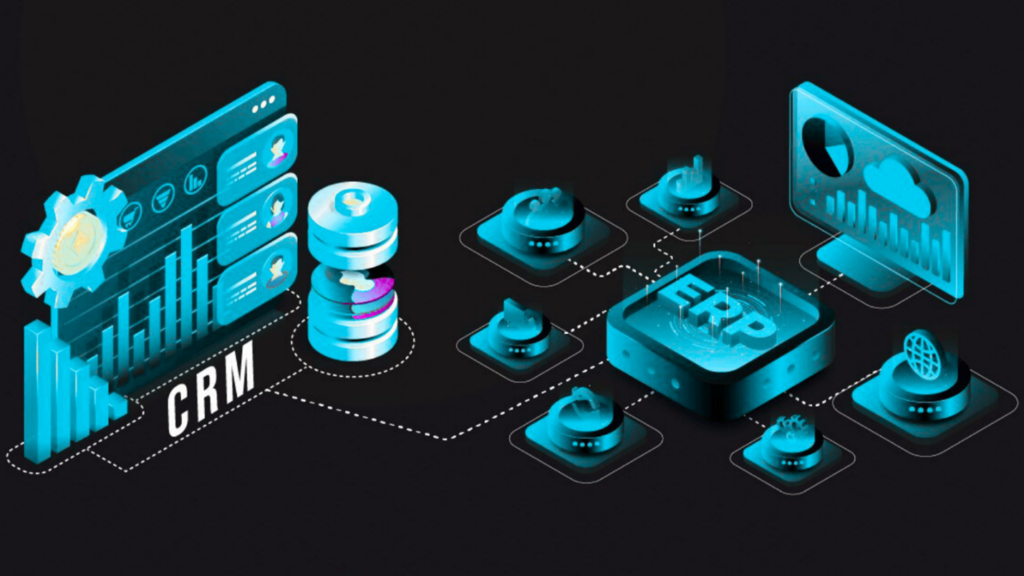
CRM-ERP integration is the process of linking customer relationship management (CRM) software with an enterprise resource planning (ERP) system. While CRM focuses on managing sales, marketing, and customer interactions, ERP oversees critical operations such as finance, supply chain, and inventory.
By bringing these two systems together, businesses gain a unified platform that enables seamless data sharing, enhances efficiency, and elevates customer service. The integration aligns front-end and back-end processes, ensuring smooth order fulfillment, streamlined logistics, and improved customer satisfaction.
This connected framework establishes a single, real-time source of truth stored in a centralized system. With consistent and accurate data at their fingertips, organizations can generate deeper insights, improve forecasting, and make more informed business decisions.
Unveiling Enterprise Resource Planning (ERP)
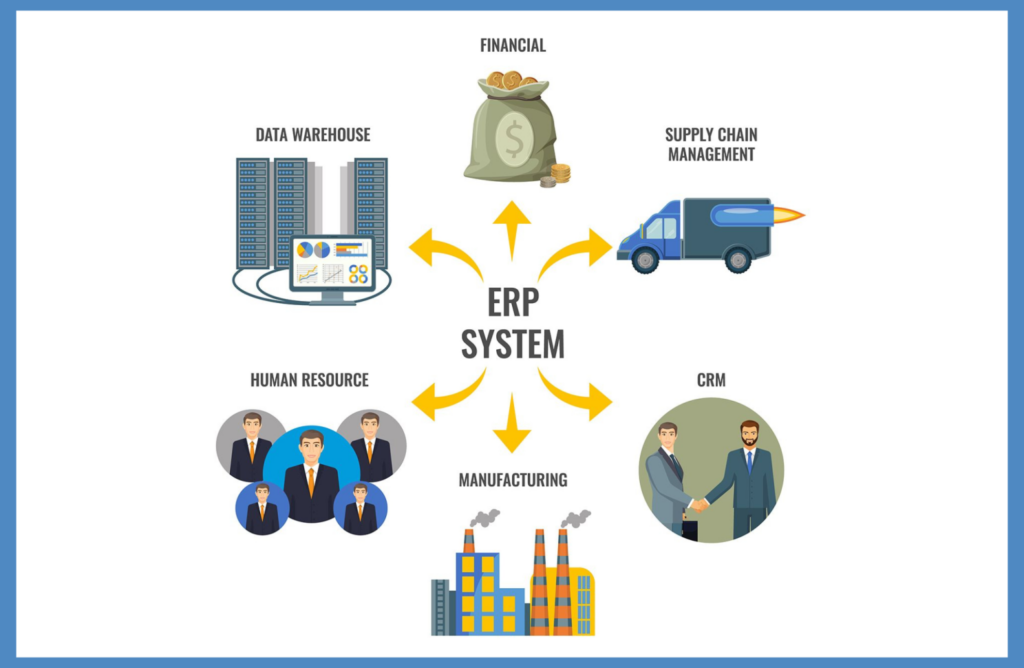
Enterprise Resource Planning (ERP) is a powerful system designed to unify and manage an organization’s core business processes. From finance and accounting to supply chain, inventory, and human resources, ERP provides a centralized platform that improves visibility, streamlines workflows, and enhances decision-making. By integrating different departments into one system, ERP ensures that data flows seamlessly across the organization, reducing inefficiencies and enabling businesses to operate with greater speed and accuracy.
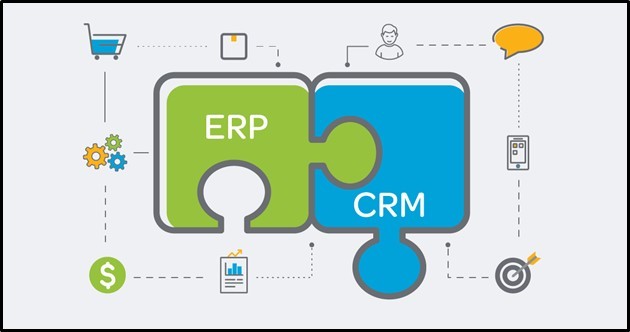
The Strategic Impact of Integrating CRM and ERP
In the realm of enterprise software, no system operates in isolation. The core purpose of an enterprise resource planning (ERP) system is to unify different business functions and provide a single, reliable source of truth. Yet, ERP is often viewed mainly as a tool for handling back-office operations such as finance, supply chain, inventory, and manufacturing. While it performs exceptionally well in these areas, its true potential expands when integrated with another essential platform: customer relationship management (CRM).
CRM serves as the cornerstone for sales and marketing, enabling organizations to monitor customer interactions, manage leads, and analyze customer behavior to fuel revenue growth. Despite this, many mid-market companies still run ERP and CRM as separate systems. In reality, integrating the two creates powerful synergies that unlock significant business value and growth opportunities.

The Challenges of CRM-ERP Integration
While the benefits of connecting CRM and ERP are undeniable, many businesses discover that the road to successful integration is not always straightforward. Several challenges can arise during implementation, and if not addressed properly, they can delay projects or reduce overall effectiveness.
1. Operational Silos In many organizations, the front office (sales, marketing, and customer service) and back office (finance, supply chain, and operations) operate independently. Each team has its own processes, tools, and priorities, which creates disconnects. When systems are not aligned, critical information gets trapped in silos, making it difficult to achieve a single, unified view of the business.
2. Complex Data Models CRM and ERP systems are built for very different purposes. CRMs focus on customer data, leads, and interactions, while ERPs handle financial transactions, inventory, and resource planning. These unique workflows and data structures don’t naturally align, which means integration requires careful mapping and customization. Without proper planning, data mismatches and errors can occur.
3. Different Deployment Models Modern CRM platforms are usually cloud-based (SaaS), while many ERP systems are still hybrid or on-premises. This difference creates compatibility challenges, particularly when trying to ensure real-time synchronization between the two. Businesses often need middleware or connectors to bridge this gap, which can add to project complexity.
4. Legacy Systems Older, outdated ERP or CRM platforms pose one of the biggest barriers to integration. Legacy systems often lack modern APIs, scalability, and flexibility. Attempting to integrate them with new tools can result in clunky performance, data bottlenecks, or even system failures. For many companies, upgrading legacy platforms becomes a necessary step before integration.
5. Change Management Even when the technology is ready, people can be resistant to change. Employees may feel uncomfortable with new workflows, fear disruption to their routines, or lack proper training on integrated systems. Without clear communication and structured change management strategies, user adoption becomes a major hurdle.
Despite these obstacles, businesses that successfully navigate integration challenges gain transformative value. CRM-ERP integration not only streamlines operations but also creates a unified source of truth, enabling smarter decisions, improved collaboration, and sustainable growth. For organizations committed to digital transformation, overcoming these hurdles is not just worth the effort, it’s a competitive necessity.
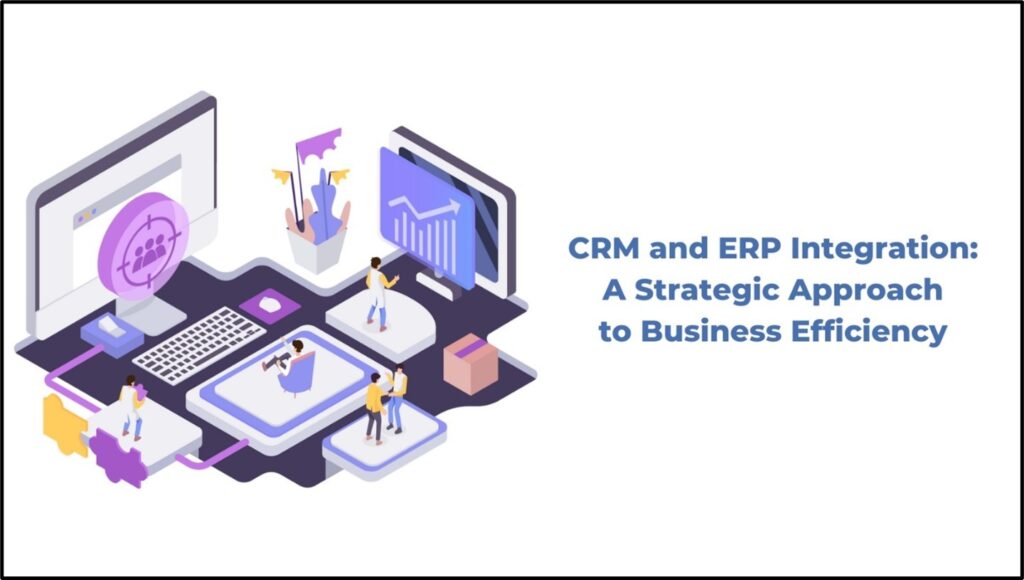
Why Modern Businesses Need CRM-ERP Integration?
Today’s businesses operate in increasingly complex and competitive environments where agility, efficiency, and customer-centricity are no longer optional—they are essential. Both ERP (Enterprise Resource Planning) and CRM (Customer Relationship Management) systems play critical roles in this landscape. ERP streamlines back-end operations such as finance, inventory, supply chain, and production management, ensuring smooth internal workflows. On the other hand, CRM empowers organizations to manage customer interactions, track sales pipelines, and run marketing campaigns that build stronger client relationships.
Individually, each system adds significant value. ERP creates operational stability and financial accuracy, while CRM enhances customer engagement and revenue opportunities. But when these two systems work in isolation, businesses often face silos, miscommunication, and inefficiencies that hinder growth.
This is where ERP-CRM integration becomes a game-changer. By connecting operational processes with customer-facing functions, businesses achieve a holistic, 360-degree view of both their internal operations and their customers. Sales teams gain access to inventory and billing data from ERP, while finance and supply chain teams can leverage CRM insights to plan more effectively. The result is a unified platform that enables:
- Greater efficiency through automated workflows and seamless data sharing.
- Stronger customer relationships by linking personalized customer engagement with accurate back-office support.
- Smarter decision-making using real-time, data-driven insights across the organization.
- Faster digital transformation as businesses break free from legacy silos and embrace integrated, cloud-enabled solutions.
Ultimately, modern businesses need ERP-CRM integration not just to survive but to thrive. In a marketplace where customer expectations are higher than ever and competition is relentless, integration empowers organizations to streamline operations, reduce costs, and unlock long-term growth.

Key Benefits of ERP-CRM Integration
1. Greater Data Accuracy Running ERP and CRM separately often results in duplicate, outdated, or inconsistent data. This can lead to miscommunication with customers, logistical errors, and inaccurate reporting. Integration establishes a single source of truth, ensuring data consistency across all functions. With accurate information, businesses can deliver faster order processing, error-free communication, and improved overall performance.
2. Richer Customer Insights CRM captures valuable customer data, from purchase history to online behavior. When connected with ERP, this information becomes actionable for back-end teams. For example, consumer demand trends can guide inventory planning, while historical interactions help deliver more personalized services.
3. Personalized Customer Experiences A fully integrated system gives companies a complete view of each customer, making true personalization possible. Whether through omnichannel shopping, social media interactions, or in-store visits, businesses can tie every customer touchpoint to operational data. This results in seamless experiences that build loyalty and boost revenue.
4. Improved Collaboration and Decision-Making Departments often work in silos, making it difficult to share critical insights. Integration enables real-time collaboration across teams. For instance, a shipping delay logged in ERP can instantly alert the support team through CRM, ensuring proactive communication with customers. This level of coordination improves responsiveness and decision-making across the organization.
5. Reduced Operational Costs Without integration, delays in accessing order histories, payment records, or sales data can cause inefficiencies and even failed deliveries. These inefficiencies are costly to resolve. By synchronizing ERP and CRM, businesses streamline operations, reduce errors, and lower long-term costs.

Best Practices for Successful CRM-ERP Integration
Integrating CRM and ERP systems is not just a technical task, it’s a strategic initiative that can reshape how a business operates. To achieve a smooth and successful integration, organizations must adopt best practices that minimize risks and maximize long-term value.
1. Check System Compatibility The first step in any integration project is to ensure that the ERP and CRM systems can communicate effectively. Modern platforms usually come equipped with APIs, connectors, or middleware that facilitate seamless integration. However, compatibility should never be assumed. A thorough technical audit is necessary to confirm that both systems can exchange data without disruptions. This proactive step prevents costly rework and system downtime later in the project.
2. Upgrade Legacy Systems Older ERP or CRM systems often lack modern integration features, making them difficult and expensive to connect. Legacy systems may also slow down processes or cause data mismatches due to outdated architecture. Upgrading to cloud-enabled, modern solutions ensures that integration is smoother, faster, and more cost-effective. This investment not only makes the integration process easier but also future-proofs the organization for scalability and innovation.
3. Prioritize Data Integrity Data is the backbone of CRM and ERP integration. If the information being shared is inconsistent, duplicated, or inaccurate, the integration will fail to deliver value. Before connecting the systems, businesses should conduct a thorough data cleansing process removing duplicates, standardizing formats, and validating records. Clean, structured data ensures that insights drawn from the integrated system are reliable, which leads to better decision-making and improved customer service.
4. Leverage Cloud and SaaS Solutions Cloud-based platforms offer greater flexibility, faster deployment, and easier scalability compared to traditional on-premises systems. Using SaaS-based CRM and ERP solutions allows organizations to integrate more efficiently and respond quickly to changing market conditions. The cloud also reduces reliance on heavy IT infrastructure, lowers maintenance costs, and provides real-time updates, which is critical for ensuring smooth operations across departments.
Can Every ERP Integrate with Every CRM?
A common question businesses ask is whether any ERP system can integrate with any CRM. The short answer is no. While modern ERP and CRM platforms are generally built with integration in mind, not every system is designed to work seamlessly with another.
Most current-generation software solutions support integration through APIs, pre-built connectors, or middleware tools that bridge communication gaps between the two systems. These tools simplify integration by mapping data fields, automating workflows, and enabling two-way data exchange. However, challenges arise when companies rely on legacy systems that lack modern integration capabilities. In such cases, businesses often face increased costs, longer timelines, and higher risks of failure.
A successful integration requires more than just software compatibility. It also depends on:
- Clean, standardized data – Without accurate and consistent data, even the best integration tools cannot ensure reliable results.
- Technical audits for compatibility – A detailed review of both systems is necessary to identify potential conflicts in workflows, data structures, or deployment environments.
- Deployment environment awareness – Whether the systems are cloud-based, hybrid, or fully on-premises plays a critical role in shaping the integration strategy. Cloud-based solutions typically integrate more easily, while on-premises systems often require custom development and additional resources.
In conclusion, while not every ERP can integrate with every CRM, businesses that use modern, cloud-enabled solutions have far greater chances of success. Careful planning, technical assessments, and data preparation are the keys to making integration smooth and effective.
Industries Where CRM-ERP Integration Delivers Maximum Impact
ERP-CRM integration is not limited to one business type—it has transformative value across multiple industries. By connecting customer-facing processes with operational workflows, organizations gain real-time visibility, improved efficiency, and stronger customer relationships. Some of the key industries include:
1. Manufacturing In manufacturing, integration ensures seamless coordination between sales, production, and supply chain. Sales forecasts from CRM can directly inform ERP-driven production schedules, helping companies optimize inventory, reduce delays, and improve order fulfillment.
2. Retail & E-Commerce For retailers, customer insights captured in CRM can be linked with ERP inventory and logistics. This integration supports personalized promotions, smooth order processing, and accurate stock management, delivering an enhanced shopping experience both online and offline.
3. Healthcare In healthcare, ERP manages administrative, financial, and operational tasks, while CRM handles patient interactions and engagement. Integration improves patient care, ensures compliance, and enables better resource allocation by connecting clinical and back-office systems.
4. Financial Services Banks and financial institutions use CRM to manage client relationships and ERP to oversee transactions, compliance, and reporting. Integration allows for a unified customer view, better financial forecasting, and more efficient operations.
5. Wholesale & Distribution For wholesalers and distributors, CRM-ERP integration enables accurate demand forecasting, better order tracking, and efficient warehouse management. It minimizes errors, improves delivery timelines, and strengthens client trust.
6. Professional Services Consulting, IT, and service-based companies benefit by linking CRM project pipelines with ERP resource planning and billing. This helps in accurate project management, optimized workforce allocation, and timely invoicing.
7. Education Educational institutions leverage ERP for administration and CRM for student engagement. Integration enables better enrollment tracking, financial planning, and personalized student experiences.

Inventiv Technology’s Role in Your Growth Journey
At Inventiv Technology, we believe that true business growth comes from smart integration and innovation. Our expertise in ERP-CRM integration ensures that your front-end and back-end systems work together seamlessly, eliminating silos, reducing inefficiencies, and creating a unified flow of information.
We don’t just provide technology solutions, we become your strategic partner. By understanding your unique business challenges, we design tailored integration strategies that align with your goals, enhance collaboration across departments, and deliver measurable results. Whether it’s improving customer experiences, streamlining operations, or driving cost efficiency, our role is to unlock your business potential.
With Inventiv Technology as your partner, you gain more than just technical support, you gain a trusted advisor committed to your long-term success. Together, we can transform data into insights, challenges into opportunities, and ideas into sustainable growth.
Conclusion
For modern businesses, ERP-CRM integration is no longer just an option, it has become a strategic necessity. By bridging the gap between front-end customer management and back-end operations, integration creates a unified ecosystem that drives efficiency, reduces costs, and unlocks new opportunities for growth. It empowers organizations to deliver personalized customer experiences, make data-driven decisions with confidence, and stay competitive in an ever-evolving digital marketplace.
At Inventiv Technology, we specialize in crafting ERP-CRM integration solutions tailored to your unique industry needs. Our approach focuses on breaking down silos, ensuring seamless data flow, and equipping your business with the tools it needs to scale effectively. More than just technology providers, we act as your transformation partners helping you align processes, improve collaboration, and achieve measurable business outcomes.
👉 The future of business success lies in smart integration. With Inventiv Technology by your side, you can confidently begin your digital transformation journey and position your business for long-term growth and innovation.
#CRMIntegration #ERPIntegration #BusinessGrowth #DigitalTransformation #CustomerExperience #OperationalExcellence #BusinessEfficiency #DataDrivenSuccess #SeamlessIntegration #FutureOfBusiness #InventivTechnology