What Is Advertising?
Advertising refers to the strategic use of paid, branded messages designed to promote products or services. Its primary goals include increasing revenue, strengthening competitive advantage, and building strong brand recognition.
When you pass by an advertisement on your way to the grocery store, it might look like a single poster or billboard. But in reality, most ads belong to a broader, integrated campaign. An advertising campaign is a collection of coordinated messages built around a unified theme, objective, or idea. These campaigns may be developed internally by a company, supported by freelance advertising experts, or executed through full-service advertising agencies.
While advertising has existed in many forms since the 1500s, today’s marketers have access to an unprecedented range of platforms, technologies, and creative formats. This variety makes modern advertising highly effective and accessible for businesses of all sizes.
The examples below illustrate how one brand’s advertising approach has transformed over time. The first image features a classic Sunbeam toaster advertisement, likely taken from a historic print publication. In contrast, the second example shows a modern Australian micro-influencer with over 28,000 followers showcasing a Sunbeam toaster in her home as part of a sponsored social media collaboration highlighting how advertising has shifted from traditional print to digital influence.
Why Is Advertising Important?
Advertising plays a critical role in the overall marketing and sales ecosystem. It is the primary method through which businesses communicate their value, promote their offerings, and influence customer behavior. Effective advertising helps brands achieve several key objectives:
- Compete Effectively in the Market: Advertising ensures your brand stays visible and relevant. It allows you to position your products or services against competitors and highlight what makes you different.
- Increase Awareness for New Products or Services: Whenever a company introduces something new, advertising becomes essential for announcing it to the right audience and accelerating early adoption.
- Maintain Relevance with Existing Customers: Consistent messaging keeps your current customers engaged, informed, and emotionally connected to the brand.
- Build Trust and Long-Term Loyalty: High-quality, consistent ads help strengthen brand credibility, making customers more willing to choose you over alternatives.
- Fuel a Sales Pipeline: Advertising attracts prospects, generates leads, and keeps your sales funnel active at all times.
- Expand into New Markets or Regions: When entering a new demographic or geographic area, advertising helps establish brand presence and awareness quickly.
- Increase Sales and Business Growth: Ultimately, advertising drives demand. Strong ads can boost purchase intent and directly influence revenue.
Without a structured advertising strategy, reaching new customers, standing out from competitors, and communicating brand value becomes significantly more difficult.
Advertising vs. Marketing: What’s the Difference?
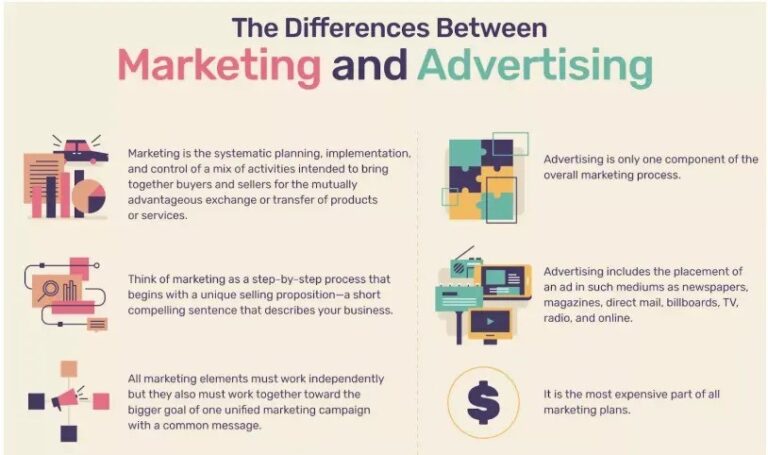
Although advertising and marketing are closely related, they serve different purposes within the broader business strategy.
Marketing is the complete process of understanding customer needs and designing solutions to meet them. It includes a wide range of strategic activities such as:
- Conducting surveys
- Performing data analysis
- Market and audience research
- Product development and testing
- Setting pricing and distribution strategies
- Building brand identity
- Planning communication frameworks
Marketing defines the what, why, and who of a product or service.
Advertising, on the other hand, is a specialized function within the marketing framework. It focuses exclusively on communicating the product’s value to the public through persuasive, targeted messages. Advertising typically includes tasks like:
- Crafting compelling messaging for specific audiences
- Identifying the best platforms and channels to reach target customers
- Developing a cohesive campaign theme
- Producing creative content (copy, visuals, videos, graphics)
- Launching ads across multiple formats
- Monitoring, testing, and optimizing performance
In simple terms:
- Marketing identifies the need and creates the solution.
- Advertising communicates the solution to the world.
The two functions continuously inform each other. Marketing insights guide advertising decisions, and advertising performance provides data that shapes future marketing strategies.
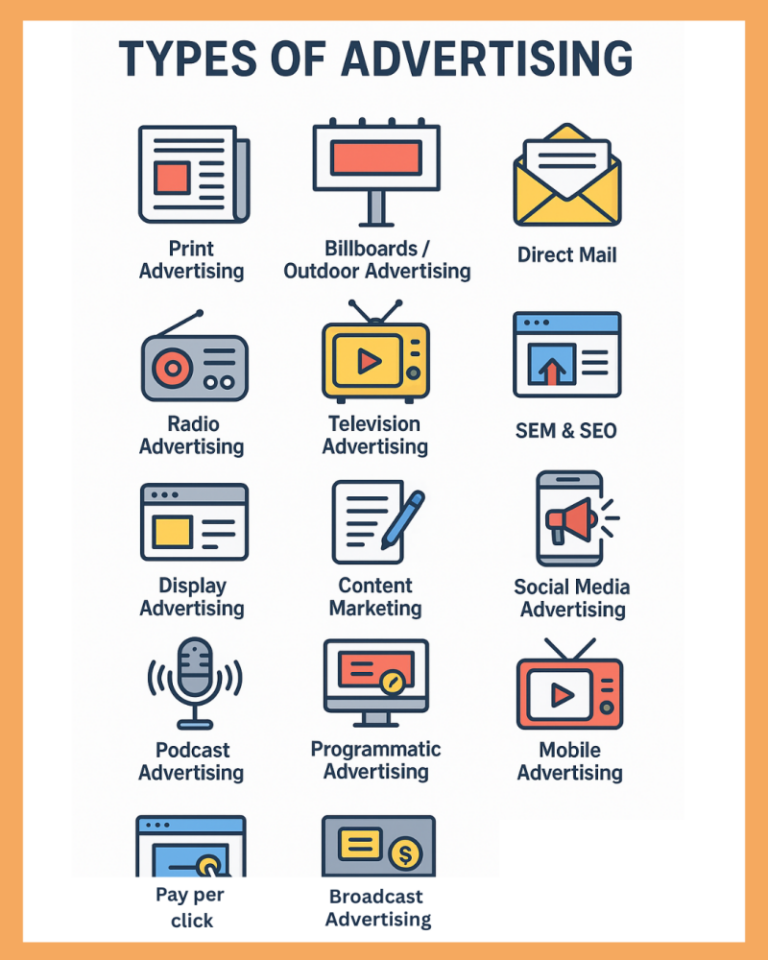
Types of Advertising:
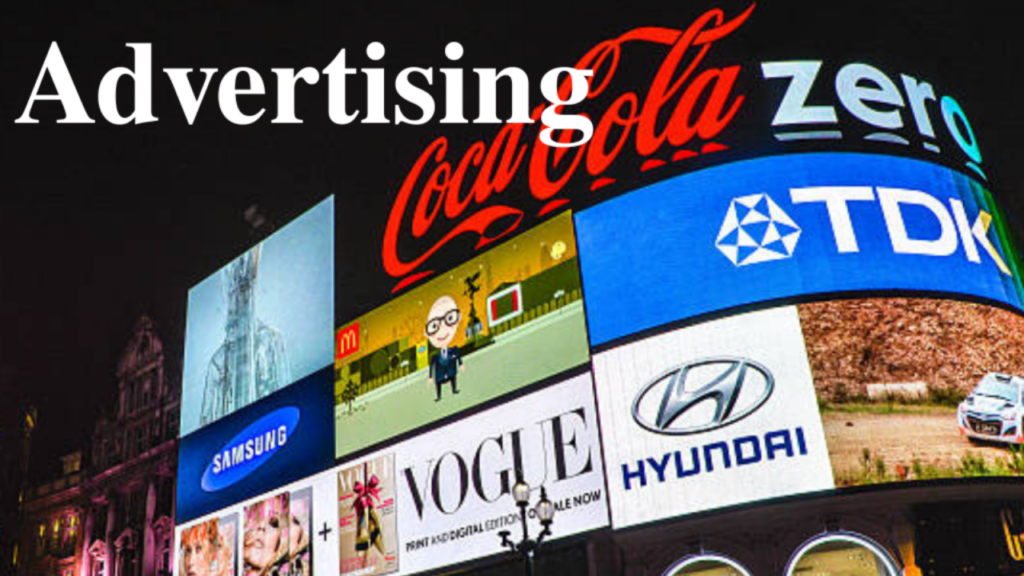
Advertising can take many forms, often working together within a single campaign to maximize reach and impact. Traditionally, advertising relied on mediums such as newspapers, magazines, billboards, radio, and television. Today, with the rise of digital technology, advertising has expanded to include online platforms, email, smartphones, and other connected devices.
Modern advertising strategies often involve multi-channel marketing, where a brand uses a combination of traditional and digital formats to engage audiences across multiple touchpoints. Some of the most common types of advertising include:
1. Print Advertising
Advertisements appearing in physical publications such as newspapers, magazines, brochures, and flyers. Print advertising remains effective for targeting specific demographics and providing detailed information.
2. Billboards / Outdoor Advertising
Large-scale displays in high-traffic areas designed to capture attention. Billboards, transit ads, and posters are used to increase brand visibility and awareness.
3. Direct Mail
Promotional materials sent directly to potential customers via postal mail. This includes catalogs, postcards, brochures, and personalized letters.
4. Radio Advertising
Audio ads broadcast on radio stations. Radio advertising allows brands to reach local or national audiences, often timed for peak listening periods.
5. Television Advertising
Commercials aired on TV channels. Television remains a powerful medium for storytelling and mass-market reach, combining visual and audio elements for maximum engagement.
6. SEM (Search Engine Marketing) & SEO
Digital advertising focused on search engines. SEM involves paid ads like pay-per-click (PPC) campaigns, while SEO improves a website’s visibility in organic search results.
7. Display Advertising
Visual ads placed on websites, apps, and social media platforms. These include banner ads, sidebar placements, pop-ups, and video ads designed to capture attention and drive traffic.
8. Content Marketing
A strategic approach that creates and shares valuable, relevant content to attract and engage a target audience. This includes blogs, articles, videos, infographics, and guides.
9. Social Media Advertising
Paid advertisements on platforms like Facebook, Instagram, LinkedIn, TikTok, and Twitter. Social media ads can be highly targeted based on demographics, interests, behavior, and location.
10. Podcast Advertising
Audio ads integrated into podcasts. Brands use host-read or pre-recorded messages to reach highly engaged audiences in specific niches.
11. Programmatic Advertising
Automated buying and placement of digital ads using software and AI. Programmatic ads allow precise targeting, optimization, and real-time delivery across multiple digital channels.
12. Mobile Advertising
Advertising delivered through smartphones and tablets, using in-app ads, mobile banners, SMS campaigns, and location-based targeting to reach users on the go.
13. PPC (Pay-Per-Click) Advertising
A digital model where advertisers pay only when someone clicks their ad. Common on search engines and social media to drive quick, targeted traffic.
14. Broadcast Advertising
Traditional advertising aired through television and radio, helping brands reach mass audiences with audio-visual or audio-only messages.
Local vs. National Advertising:
Advertising campaigns can be executed at different geographic levels, depending on a company’s budget, target audience, and marketing objectives. Choosing the right level ensures maximum efficiency and return on investment.
1. National Advertising
National advertising campaigns aim to reach a broad audience across an entire country. They are usually suited for large corporations with extensive budgets and a need for widespread brand awareness. Common strategies for national campaigns include:
· Billboards Across the Country: Displaying large-scale advertisements along highways, major cities, and prominent public areas nationwide.
· Television Commercials on National Channels: Running ads during popular shows or programs broadcasted across the country.
· Sponsoring National Radio Shows: Associating your brand with radio programs that have listeners in multiple regions.
· Country-Wide Digital Campaigns: Setting programmatic or social media ad campaigns to target all users within a specific country.
· Social Media Targeting by Country: Delivering content to users based on their location or the country of their account.
National campaigns are ideal for launching new products, building brand recognition, and creating a unified message on a large scale.
2. Local Advertising
Local advertising focuses on a specific city, region, or community. These campaigns are typically more affordable and effective for small to medium-sized businesses aiming to reach nearby customers. Local advertising methods may include:
· Regional Posters or Transit Ads: Placing advertisements on buses, subways, or train stations within a specific city or area.
· Local TV or Radio Shows: Advertising during programs that air only in a particular region.
· Event Sponsorships: Supporting local fairs, festivals, or community events to engage a nearby audience.
· Geo-Targeted Digital Ads: Narrowing the audience for social media or programmatic campaigns to a specific postal code, city, or state.
Local campaigns allow brands to engage customers in a highly targeted and contextually relevant way.
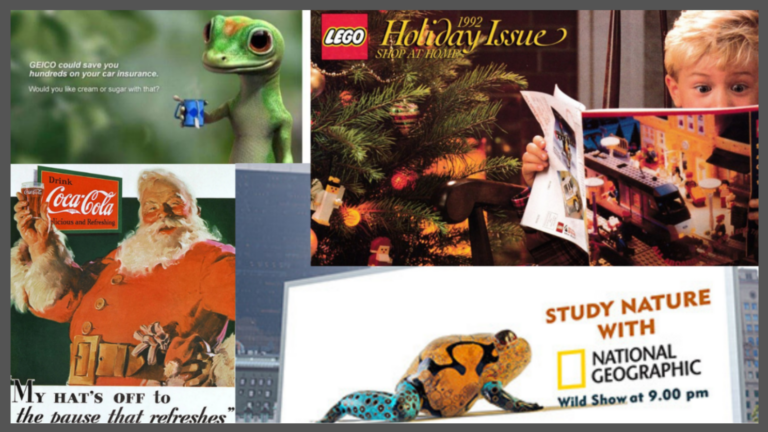
4 Advertising Examples That Will Inspire You:
Effective advertising goes beyond simply presenting facts it connects with viewer’s values, emotions, and experiences. Understanding your target audience is crucial to crafting campaigns that resonate. The following four companies exemplify powerful and memorable advertising in action:
1. Coca-Cola
Founded: 1886 Mascots: Polar Bears, Santa Claus Slogan: “Real Magic” (2021)
Coca-Cola excels at maintaining a consistent brand message. While its slogans evolve over time, its campaigns always emphasize happiness, togetherness, and refreshment. Paired with the brand’s iconic white-on-red logo, Coca-Cola ads leave a lasting impression and have become ingrained in popular culture.
One notable example is Coca-Cola’s influence on how children imagine Santa Claus. The rosy-cheeked, jolly Santa we know today originated from a 1931 Coca-Cola advertisement and continues to appear in the brand’s holiday campaigns.
Coca-Cola’s advertising strategy blends digital marketing, social media, endorsements, product placements, national print, and television ads, ensuring wide reach and cultural relevance.
2. GEICO
Founded: 1936 Mascot: The GEICO Gecko Slogan: “15 Minutes Could Save You 15% or More on Car Insurance”
Originally created for government employees, GEICO did not advertise to the general public until the 1970s. Over the years, the company experimented with multiple ad formats and mascots before introducing the beloved GEICO Gecko in 1999.
The gecko mascot appears in most of GEICO’s campaigns, which often employ humor and pop culture references to make the typically dry topic of insurance entertaining and memorable. GEICO combines print, television, and digital advertising, including pre-roll ads on streaming platforms, to reach potential customers effectively.
3. LEGO
Founded: 1932 Mascots: Various LEGO minifigures Slogan: “Only the Best is Good Enough”
LEGO advertising primarily targets adults buying for themselves or their children. Because the LEGO brick has remained largely unchanged since the 1940s, the company leverages multi-generational nostalgia to create emotional connections. For example, LEGO’s 2021 ad campaign echoed a popular series from the 1980s, appealing to both longtime fans and new audiences.
In addition to traditional advertising, LEGO invests in content marketing across paid and earned media, consistently producing campaigns that engage children and adults alike.
4. National Geographic
Founded: 1888 Mascot: None Slogan: “Further”
From its beginnings as a print magazine, National Geographic has expanded into television and digital platforms while maintaining a strong, recognizable identity through its iconic yellow-bordered logo.
National Geographic ads often appeal to viewers’ emotions, highlighting important issues or inspiring curiosity about the natural world. For example, an ad may depict a plastic straw in a striking way to emphasize environmental concerns encouraging viewers to think, feel, and take action.
This approach demonstrates the brand’s deep understanding of its audience, combining emotional storytelling with informative content that drives engagement.
How to Advertise Your Business in 7 Steps?
Inspired by great advertising examples? Follow these seven steps to effectively promote your business and maximize your return on investment.
1. Understand Your Audience
Before launching any campaign, define your target audience. Without this, ads may reach people unlikely to buy your product, wasting time and money.
· Determine if your customers are individuals or businesses.
· Gather data on age, interests, income, occupation, location, values, and lifestyle.
· Conduct market research to confirm demand.
· Analyze competitors’ ads and performance.
Once identified, consider secondary segments to create additional ad sets that boost conversion rates.
2. Create Personas
Turn audience data into buyer personas fictional profiles representing key customer groups. Each persona should include:
· Name (e.g., “Home Chef Harry”)
· Demographics (age, income, occupation, location, interests)
· Goals and pain points
· Values, fears, and habits
Use these personas to guide messaging and ad structure across campaigns.
3. Determine Where to Advertise
Identify the platforms and channels your audience uses most. You may need multiple channels to reach all personas effectively, from social media to traditional advertising.
4. Develop Effective Ads
Create ad content tailored to each channel and persona, but maintain a consistent theme or emotion across all ads. Consistency helps viewers recognize your brand, even when they encounter it across different platforms.
5. Test with Potential Customers
Before full launch, test your ads with a small audience or focus group. Use A/B testing for digital campaigns to see which versions perform best. Testing helps improve engagement and avoids wasted spend.
6. Review Results
Track performance during and after your campaign. Adjust messaging, channels, or even the product if needed.
Example: In 1985, Coca-Cola’s “New Coke” ads failed not due to poor advertising, but because consumers disliked the product. By monitoring results, Coca-Cola quickly reverted the change, preventing long-term brand damage.
7. Evolve Your Strategy
Learn from each campaign to refine future advertising. Even iconic brands like Coca-Cola, LEGO, or GEICO continually update their approaches to meet changing audience preferences. Staying adaptable ensures your brand remains relevant and competitive.
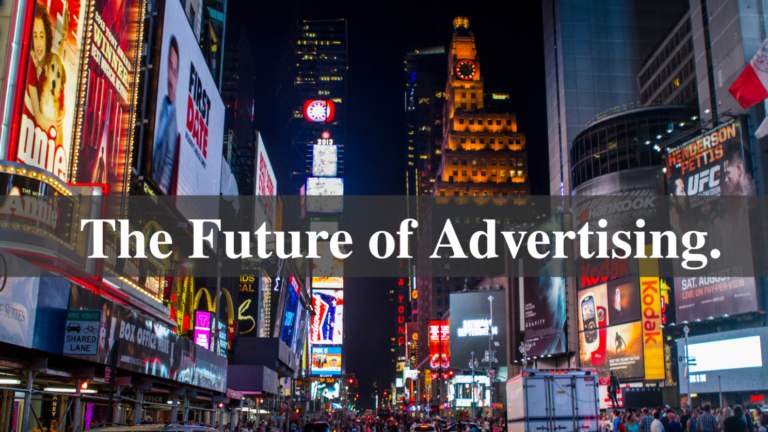
Let’s Continue Shaping the Future of Advertising:
At Inventiv Studio, we recognize that the landscape of advertising is changing faster than ever and with every shift comes a new opportunity to innovate. Today’s audiences expect relevance, authenticity, and creativity, and it’s our mission to help brands deliver exactly that. From data-driven insights to high-impact campaigns, we are committed to transforming ideas into real-world results.
As technology evolves and new platforms emerge, the future of advertising belongs to those who stay curious, adaptive, and bold. Together, let’s explore smarter strategies, embrace new storytelling methods, and rethink how brands connect with people in meaningful ways.
Whether it’s through powerful digital experiences, compelling content, or targeted multi-channel campaigns, Inventiv Studio is here to empower your growth every step of the way.
Thank you for joining us in this journey. Your ambition, combined with our expertise, has the potential to set new standards in the advertising world.
Let’s Wrap This Up!
As the advertising world continues to evolve, one thing remains constant: the power of smart, strategic communication. At Inventiv Studio, we’re committed to helping brands navigate this ever-changing landscape with creativity, clarity, and data-driven precision.
Whether it’s traditional media, digital platforms, or the latest AI-powered solutions, our goal is simple to make your brand seen, heard, and remembered.
Thank you for exploring these advertising types with us.
Catch you in the next edition with fresh ideas and smarter strategies.
• Visit Us: 🌐 www.inventivtechnology.com | 💻 https://inventivstudio.com/
• Email Us on: info@inventivtechnology.com
#Advertising #DigitalAdvertising #MarketingStrategy #BrandAwareness #CreativeAds #AdCampaign #SocialMediaAds #ContentMarketing #BillboardAds #PrintAdvertising #TVAds #RadioAdvertising #MobileAdvertising #PPC #SEMandSEO #ProgrammaticAds #DisplayAdvertising #InfluencerMarketing #BusinessGrowth #BrandPromotion #TargetAudience #MarketingTips #AdDesign #OnlineMarketing #MediaBuying #BrandIdentity #CreativeMarketing #MarketingTrends #AdAgency #CampaignStrategy
- By ASFARZAIDI
- 8