

Cloud Native & DevOps:
Modernize Your Deployment
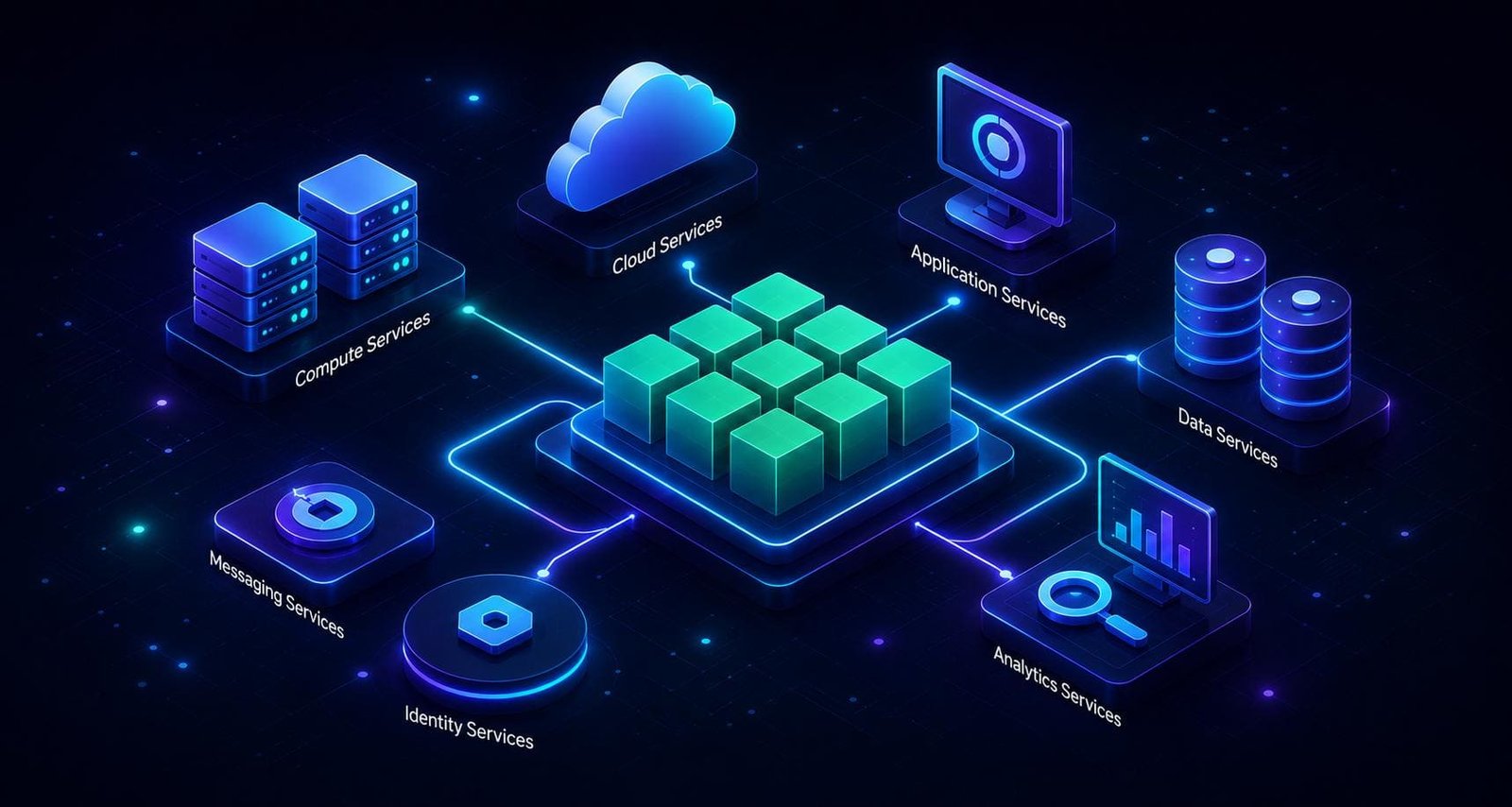
Organizations are under pressure to deliver software quickly while ensuring reliability. Traditional development methods create delays, but cloud native technologies and DevOps practices provide a solution. Companies using cloud native architectures see faster development cycles and reduced infrastructure costs. They can deploy updates frequently instead of quarterly.This transition requires skills that many organizations lack. Cloud native development involves new expertise in containers and microservices, while DevOps needs cultural shifts alongside technical changes. Inventiv Cloud helps businesses navigate this transformation with our Cloud Native & DevOps Services, offering strategic consulting and hands-on implementation to modernize infrastructure and automate processes.
Ready to Accelerate Your Digital Transformation?
Our cloud experts design custom solutions that align with your business objectives. Schedule a consultation to discover how cloud native and DevOps practices can transform your operations. By adopting cloud native architecture and automated DevOps workflows, your organization can accelerate deployment cycles and drive continuous innovation across every stage of the software development lifecycle.
Understanding Cloud Native Application Development
Cloud native represents a fundamental shift in how organizations build and run applications. This approach leverages cloud computing fully rather than simply moving existing applications to cloud infrastructure. As a result, businesses can achieve greater agility and innovation.The cloud native methodology embraces specific architectural patterns. Applications break into smaller, independent services called microservices.
Each service handles a distinct business function and operates autonomously. This modularity allows for faster development and deployment cycles.Containers package these microservices with their dependencies. This packaging ensures applications run consistently across different environments. Developers build once and deploy anywhere without environment-specific modifications. Consequently, teams can focus on delivering value rather than troubleshooting deployment issues.
Core Principles of Cloud Native Architecture
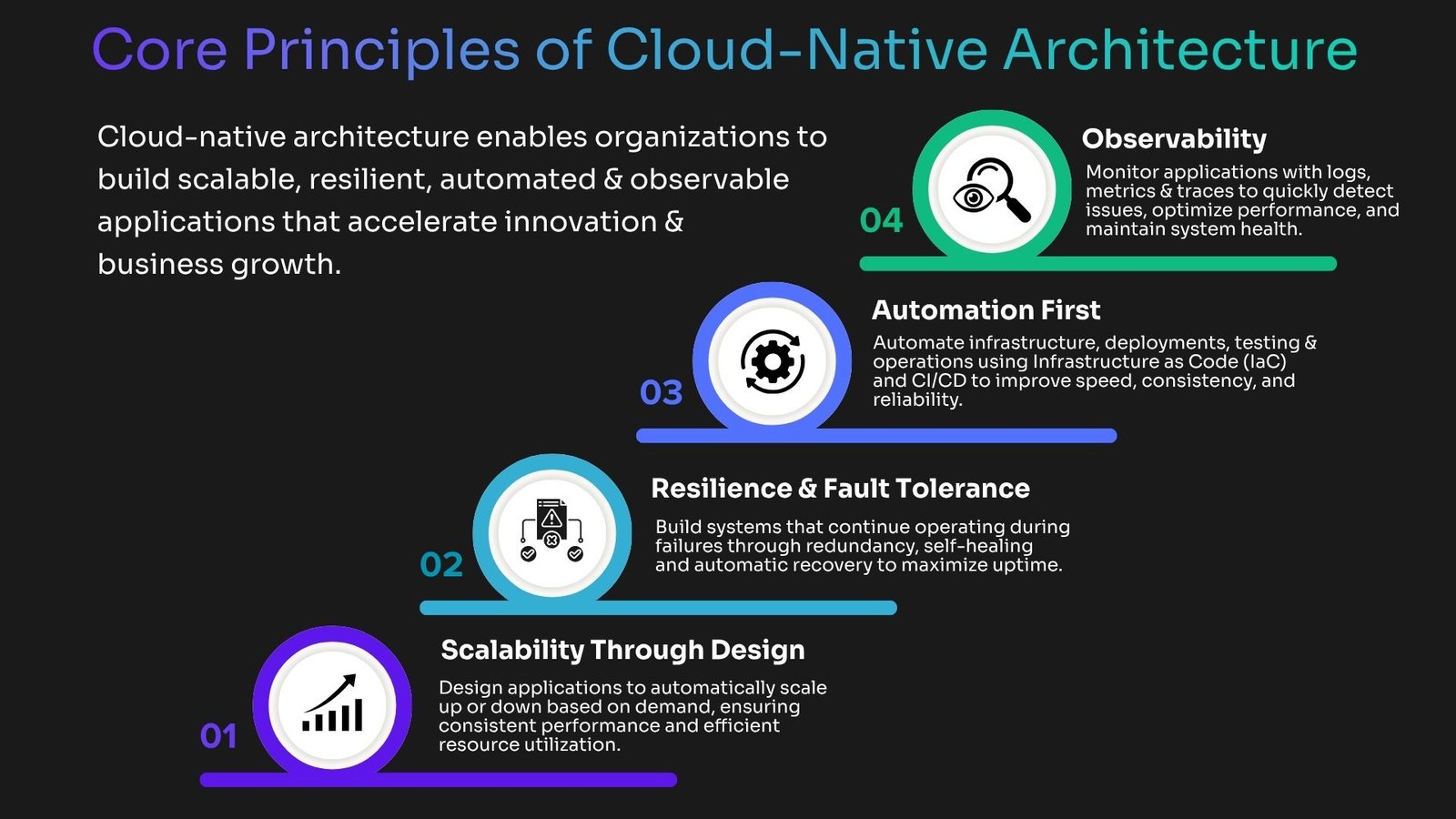
Cloud native architectures follow established principles that maximize cloud benefits. These principles guide teams toward building scalable and resilient systems, ensuring that applications can adapt to changing demands and maintain high availability. By embracing these methodologies, organizations can leverage the full potential of cloud computing, leading to improved efficiency, faster time-to-market, and enhanced customer satisfaction. As teams adopt these principles, they not only enhance their technical capabilities but also foster a culture of innovation and agility within their organizations.
Scalability Through Design
Applications scale horizontally by adding more instances rather than upgrading individual servers. This approach handles variable workloads efficiently. This flexibility allows organizations to respond swiftly to changing demands and optimize resource utilization. By leveraging auto-scaling capabilities within cloud infrastructure, businesses can maintain consistent performance during traffic spikes while minimizing costs during periods of lower demand.
Resilience and Fault Tolerance
Systems expect and handle failures gracefully. Components continue operating when individual services encounter issues. This resilience ensures minimal disruption to overall operations, allowing businesses to maintain continuity. By implementing fault-tolerant architecture and automated failover mechanisms, organizations can achieve high availability and safeguard critical business processes against unexpected outages.
Automation First
Manual processes give way to automated workflows. Infrastructure provisioning, testing, and deployment happen without human intervention. This shift not only accelerates development cycles but also minimizes the risk of human error. Leveraging infrastructure as code and CI/CD pipelines further enables organizations to achieve consistent, repeatable deployments while improving overall operational efficiency.
Observability
Systems expect and handle failures gracefully. Components continue operating when individual services encounter issues. This resilience ensures minimal disruption to overall operations, allowing businesses to maintain continuity. By implementing fault-tolerant architecture and automated failover mechanisms, organizations can achieve high availability and safeguard critical business processes against unexpected outages.
Benefits of Cloud Native Approach
Cloud native adoption enables businesses to accelerate product development cycles, reduce time-to-market, and deliver superior customer experiences through scalable, resilient application architectures. Organizations leveraging containerization, microservices, and automated CI/CD pipelines can rapidly iterate on new features while maintaining system reliability and performance.
- Development teams can deploy features more rapidly with cloud-native architectures.
- Microservices enable simultaneous development of different components.
- No need to wait for monolithic application releases; updates can be deployed independently.
- Infrastructure costs are reduced through efficient resource utilization.
- Applications automatically scale based on demand, avoiding over-provisioning.
- Cloud services are billed based on actual resource usage.

DevOps Fundamentals and Implementation
DevOps merges software development and IT operations into a unified approach. This methodology breaks down traditional silos between teams building applications and teams running them.The DevOps philosophy emphasizes collaboration, automation, and continuous improvement. Development teams gain responsibility for application performance in production. Operations teams participate earlier in the development process.
Key DevOps Practices
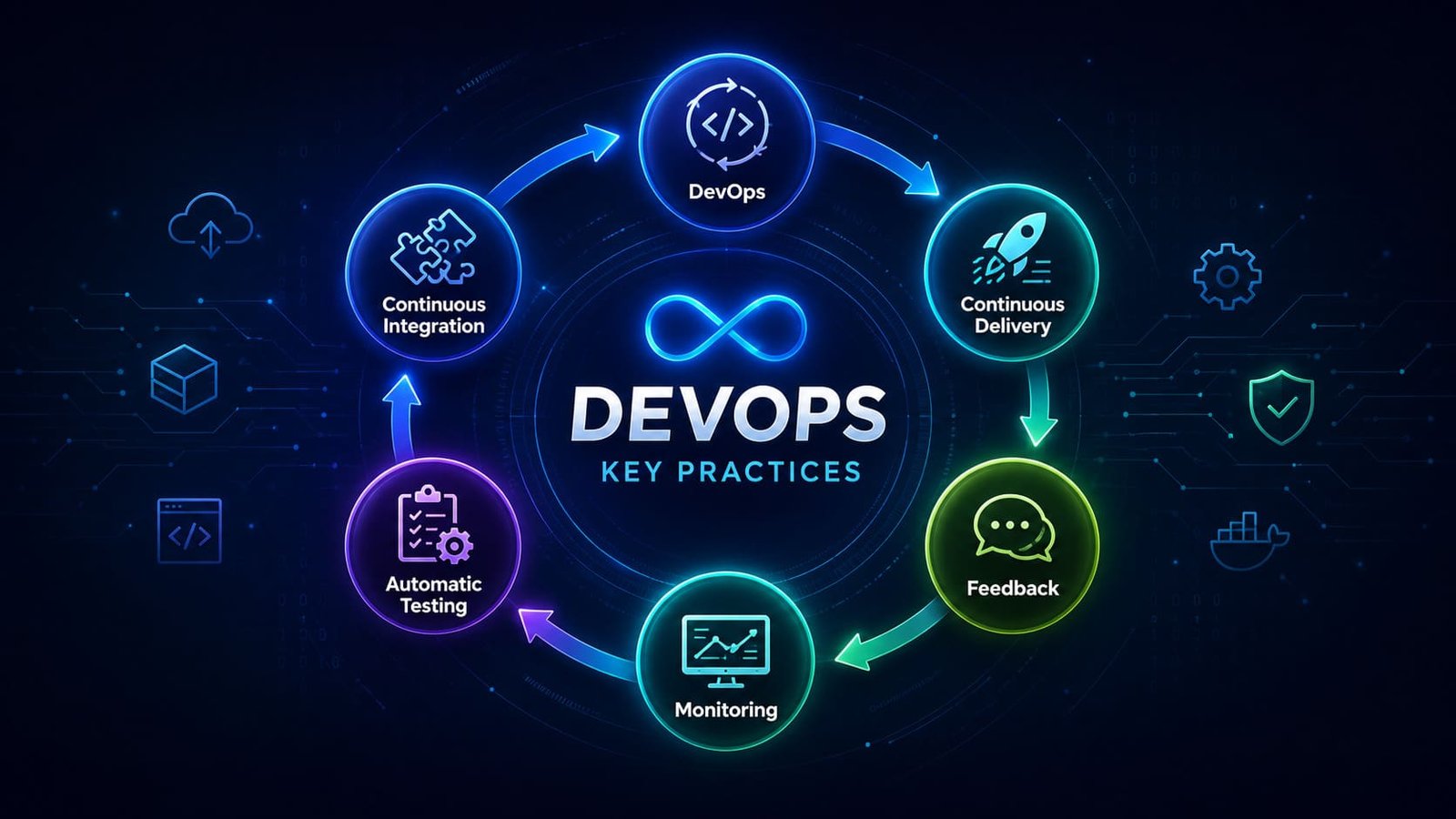
Successful DevOps implementation relies on core practices that streamline collaboration between development and operations teams while accelerating software delivery. Continuous integration and continuous deployment (CI/CD) pipelines automate the building, testing, and release of code, enabling faster, more reliable software updates with minimal manual intervention. Infrastructure as code allows teams to provision and manage cloud resources consistently through version-controlled scripts, reducing configuration errors and improving scalability. Additionally, robust monitoring and observability practices provide real-time visibility into application performance, enabling rapid detection and resolution of issues before they impact end users.
Cultural Transformation in DevOps
Successful DevOps requires an evolving organizational culture that fosters collaboration and shared responsibility.Teams embrace a growth mindset, viewing failures as opportunities for learning & focusing on system improvements rather than assigning blame.Increased transparency enables teams to share metrics and challenges, helping to identify bottlenecks and improve communication among developers, operations, and stakeholders.
This culture of transparency is often supported by centralized dashboards and real-time reporting tools that provide visibility into deployment frequency, system performance, and incident response times across the entire organization. By openly sharing key performance indicators and operational challenges, cross-functional teams can collaboratively troubleshoot issues, streamline workflows, and align priorities more effectively.


Measuring DevOps Success
To assess DevOps effectiveness, organizations utilize key metrics that inform improvement and highlight value. Deployment frequency shows how often changes are released, with high-performing teams achieving multiple daily deployments, reflecting confidence in their processes.Lead time for changes and mean time to recovery are crucial metrics as well.
Shorter lead times facilitate quicker market responses, while reduced recovery times after incidents demonstrate operational resilience, indicating a balance between speed and reliability.Tracking these DevOps performance metrics allows organizations to benchmark their software delivery capabilities against industry standards and identify areas for continuous improvement. Deployment frequency, another key indicator, reflects an organization’s ability to release updates rapidly and consistently without compromising quality or stability.
Container Orchestration and Kubernetes
Containers revolutionized application packaging and deployment. These lightweight, portable units encapsulate applications with their dependencies. Container technology enables consistent operation across diverse environments.Docker emerged as the leading container platform for building and running containers. Developers create container images that package application code, runtime, libraries, and configuration. These images run identically on developer laptops, testing environments, and production infrastructure.
The Need for Orchestration

Managing individual containers works for simple applications. Production systems require orchestration platforms that coordinate hundreds or thousands of containers. Kubernetes is the leading platform for container orchestration, automating deployment, scaling, and management. It efficiently schedules containers, monitors their health & automatically replaces failures while balancing loads across replicas.
Kubernetes Core Components

Kubernetes architecture enables teams to utilize its features effectively. It comprises key components: Pods are the smallest deployable units, housing one or more containers that share resources. Services offer stable access points for pods, balancing load and facilitating communication. Deployments oversee pod lifecycles, ensuring the desired state matches reality, and manage updates and rollbacks.
Kubernetes Benefits

Organizations implementing Kubernetes experience significant operational benefits, as it enhances resource utilization through optimal container scheduling and automatic scaling based on metrics. This allows for effective management of multi-cloud and hybrid deployments, ensuring consistent operations across various infrastructures while avoiding vendor lock-in.
Continuous Integration & Continuous Deployment Pipelines
CI/CD pipelines automate the journey from code commit to production deployment. These automated workflows eliminate manual steps that slow delivery and introduce errors. Continuous integration pipelines trigger automatically when developers commit code changes. The pipeline compiles code, runs automated tests, and performs security scans. Teams receive immediate feedback on code quality and compatibility.
Building Effective CI Pipelines
Successful continuous integration requires thoughtful pipeline design. Effective pipelines balance thoroughness with speed. Version control systems kick off the pipeline, with Git repositories triggering builds on code merges. Branch strategies dictate which commits start the pipeline.Automated testing acts as the quality gate, using unit, integration, and performance tests to ensure functionality and response times. Build artifacts, like container images and binaries, are created and versioned for deployment, ensuring consistency across environments.
This automated testing and build process forms the foundation of a robust CI/CD pipeline, enabling development teams to catch defects early and maintain consistent code quality throughout the software development lifecycle. Version-controlled build artifacts ensure that every deployment, from staging to production, uses identical, thoroughly validated components, significantly reducing the risk of environment-specific errors.


Continuous Deployment Implementation
Continuous deployment automates production releases for code that passes all checks, eliminating manual approval. Deployment strategies like blue-green deployments use two identical environments, allowing instant rollback if issues arise.
Canary releases introduce changes to a small user group, monitoring performance before full deployment to ensure stability. Rolling updates incrementally replace application instances, keeping applications available during the process.These progressive deployment strategies significantly reduce the risk associated with releasing new features or updates by allowing teams to identify and address issues before they impact the entire user base. Blue-green deployments offer an alternative approach, maintaining two identical production environments to enable instant rollback capabilities in case unexpected problems arise.
Pipeline Security and Compliance
Security scanning is crucial in CI/CD pipelines, ensuring vulnerabilities don’t reach production. Static code analysis checks for security flaws and coding issues, allowing developers to address problems before merging code.Dependency scanning detects vulnerable libraries, with pipelines verifying dependencies against vulnerability databases to prevent insecure packages.
Container image scanning reviews layers for security risks, ensuring only secure images are deployed.These automated security scanning practices form a critical component of DevSecOps, embedding vulnerability detection directly into the CI/CD pipeline rather than treating security as an afterthought. By continuously monitoring dependencies and container images against up-to-date vulnerability databases, organizations can identify and remediate security risks early in the development process, significantly reducing the likelihood of deploying compromised code to production.

Infrastructure as Code and Configuration Management
Infrastructure as code transforms infrastructure management from manual processes to automated, version-controlled workflows. Teams define infrastructure using code files rather than configuring systems manually. This approach treats infrastructure configuration with the same rigor as application code. Changes undergo code review, testing, and version control. Teams track infrastructure evolution and audit all modifications.
Core IaC Tools and Platforms
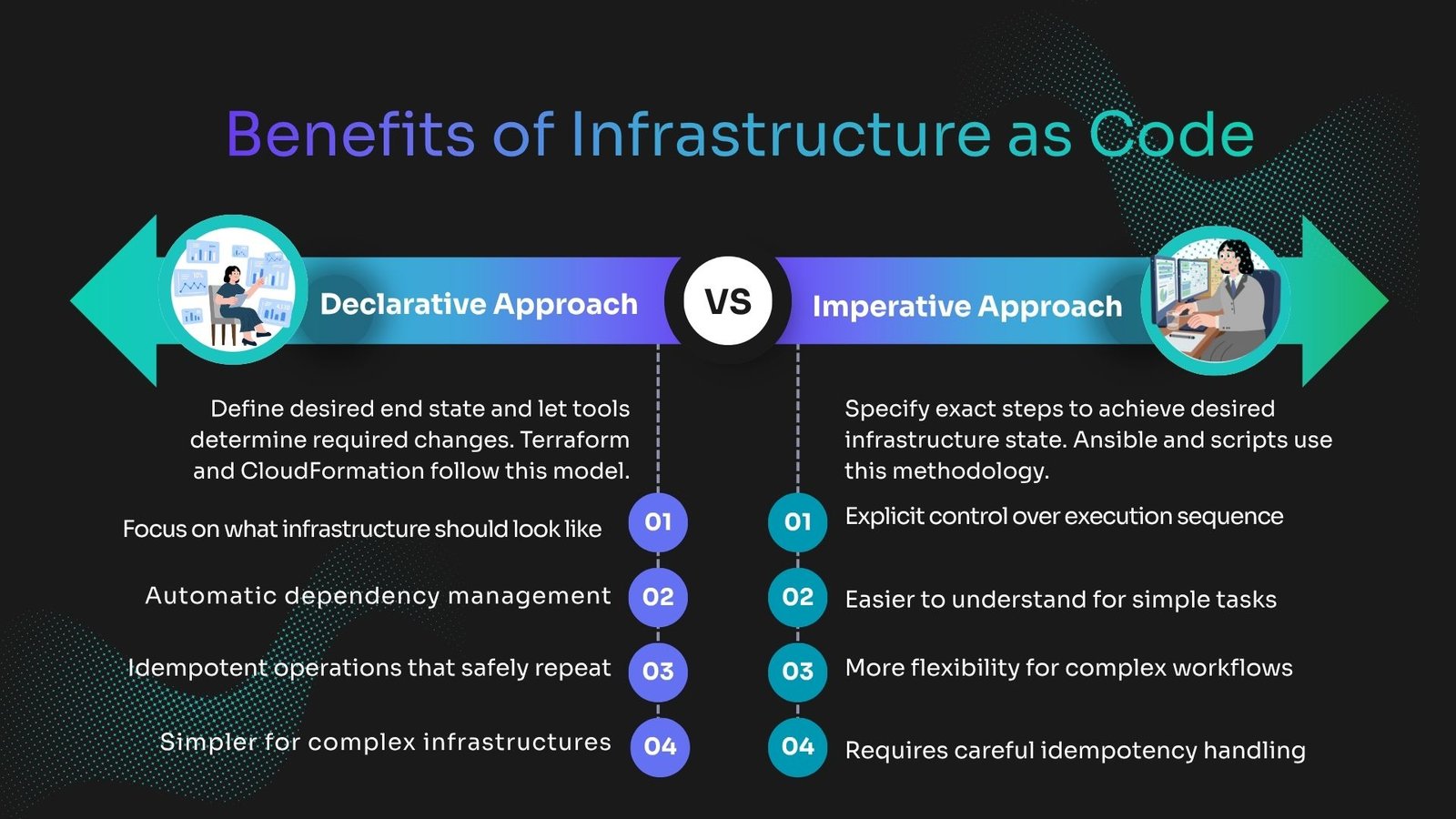
Several tools dominate the infrastructure as code landscape. Each addresses specific use cases and deployment scenarios. Terraform enables cloud-agnostic infrastructure provisioning through declarative configuration files, managing resources across various cloud providers with a unified approach.Ansible simplifies configuration management and application deployment using YAML files to define system states, operating without agents and requiring only SSH access. CloudFormation facilitates AWS infrastructure management via templates in JSON or YAML, automating resource creation, updates, and deletions.
Benefits of Infrastructure as Code
Adopting IaC leads to operational gains, especially as infrastructure grows. Consistency across environments is achieved, eliminating configuration drift. Automated recovery processes reduce downtime significantly. Additionally, the code serves as live documentation, preventing issues with outdated information.
Best Practices for IaC Implementation
Successful infrastructure as code adoption hinges on established best practices that help avoid common issues. Version control all infrastructure code in Git, treating changes similarly to application code, and utilize pull requests for review. Additionally, modularize code into reusable components to enhance consistency and reduce duplication.Testing infrastructure code is crucial before production deployment, ideally using separate AWS accounts for validation. Furthermore, manage state carefully to prevent conflicts by employing remote state backends and enabling state locking for team collaboration.
Microservices Architecture and Design Patterns
Microservices architecture decomposes applications into small, independent services. Each service implements a specific business capability and operates autonomously. This architectural style contrasts with monolithic applications where all functionality exists in a single codebase. Microservices communicate through well-defined APIs using lightweight protocols.
Characteristics of Microservices
Effective microservices share common characteristics that enable their benefits. Understanding these traits guides proper service design. Services operate independently, allowing teams to update them without coordination, which speeds up delivery.
This decentralized data management approach is a core principle of microservices architecture, allowing development teams to independently deploy, update, and scale individual services without disrupting the broader application ecosystem. By organizing services around specific business capabilities, organizations achieve greater alignment between technical implementation and business objectives, enabling faster feature development and more targeted resource allocation. This architectural strategy ultimately enhances system flexibility, simplifies maintenance, and supports the agility needed to adapt quickly to evolving business requirements.


Communication Patterns
Microservices utilize various communication patterns tailored to specific needs, impacting overall system efficiency. Synchronous methods like HTTP REST APIs allow direct service requests, ideal for real-time interactions.This event-driven communication model enhances system resilience by allowing services to operate independently, even during periods of high traffic or temporary service unavailability.
Message queues and event streaming platforms enable reliable, asynchronous data exchange, reducing the risk of cascading failures across the microservices ecosystem. Meanwhile, service mesh technologies provide critical infrastructure capabilities, including traffic management, security policies, and observability, simplifying the complexity of inter-service communication. Together, these architectural patterns empower organizations to build highly scalable, fault-tolerant applications capable of handling dynamic workloads with minimal operational overhead.
Challenges and Solutions
Microservices introduce complexity that teams must manage. Effective tooling and practices can alleviate these issues. Distributed tracing aids in debugging by assigning unique identifiers to requests, allowing teams to visualize paths and identify bottlenecks.These foundational components work together to ensure seamless communication and reliable traffic management across distributed microservices environments.
API gateways further enhance security and performance by centralizing critical functions such as access control, traffic throttling, and protocol translation, providing a unified interface that shields clients from the underlying complexity of the microservices ecosystem. Together, these tools enable organizations to build resilient, scalable applications while simplifying operational management

Monitoring, Logging, and Observability
Three Pillars of Observability
Observability rests on three complementary data types. Together they provide complete system visibility. Metrics represent numerical measurements over time. They track request rates, error rates, response times, and resource utilization. Time-series databases store metrics for analysis and visualization. Traces follow individual requests through distributed systems. They show complete request paths including timing for each service interaction. Distributed tracing identifies performance bottlenecks and failure points.
Implementing Effective Monitoring
Production systems require monitoring that detects issues before users notice. Effective monitoring balances coverage with alert fatigue. Grafana visualizes metrics through customizable dashboards. Teams create dashboards showing system health and performance. Real-time graphs help identify trends and anomalies. Alert rules notify teams when metrics exceed thresholds. Well-designed alerts indicate actual problems requiring attention. Teams tune alerts to minimize false positives.
Logging Best Practices
Structured logging improves log usefulness in distributed systems. JSON-formatted logs enable powerful filtering and analysis. Log levels distinguish message importance. Debug logs help development but create noise in production. Error and warning levels indicate problems requiring attention. Correlation IDs connect related log entries across services. Single request IDs flow through all involved services. Teams filter logs by correlation ID to see complete request stories
Distributed Tracing Implementation
Tracing instruments applications to record request flows. Libraries like OpenTelemetry standardize trace collection. Jaeger and Zipkin store and visualize distributed traces. These tools show request timelines with service call durations. Teams identify slow services and optimize performance. Trace sampling manages data volume in high-traffic systems. Systems record subset of requests rather than every transaction. Smart sampling captures error while limiting storage costs.
Security Best Practices
Effective cloud native security addresses multiple layers. Defense in depth provides overlapping protections. Identity and access management ensures that only authorized users can access specific resources, utilizing role-based access control and multi-factor authentication for enhanced security. Secrets management safeguards sensitive data, with tools like HashiCorp Vault enabling secure retrieval of credentials at runtime.
This comprehensive, multi-layered security approach is essential for protecting cloud native applications throughout their entire lifecycle, from development to production deployment. Implementing robust encryption protocols for data at rest and in transit further strengthens the overall security posture, safeguarding sensitive information against unauthorized access and potential breaches. Continuous security monitoring and automated compliance checks enable organizations to detect anomalies in real time and maintain adherence to industry regulations.


Compliance Considerations
Organizations must maintain compliance with industry regulations and standards. Cloud environments introduce new compliance challenges. Data residency requirements dictate where data can physically reside. Cloud regions help meet geographic restrictions. Teams must configure services to respect data sovereignty laws. Immutable logs provide evidence for compliance audits. Centralized logging systems retain logs for required periods. Encryption protects data at rest and in transit. Cloud providers offer encryption services for storage and databases.
Achieving continuous regulatory compliance in cloud environments also requires implementing automated compliance monitoring tools that continuously assess configurations against established frameworks such as GDPR, HIPAA, and SOC 2. Regular compliance audits, combined with detailed audit trails, help organizations demonstrate accountability and quickly identify potential gaps in their security posture.
Security Automation
Manual security processes cannot keep pace with cloud native deployment speeds. Automation embeds security into continuous delivery pipelines. Automated compliance scanning checks infrastructure against compliance frameworks. Services evaluate configurations against CIS benchmarks or industry standards. Regular scans detect drift from compliant states. Incident response automation accelerates security issue resolution. Automated playbooks respond to common security events. Teams focus on complex issues while automation handles routine responses.
This shift toward automated security operations, often referred to as DevSecOps, enables organizations to embed continuous security validation throughout the entire software delivery lifecycle without sacrificing development velocity. Automated vulnerability scanning and policy-as-code enforcement ensure that infrastructure remains compliant in real time, reducing the window of exposure to potential threats.