

From Startups to Giants: How Cloud Infrastructure Fuels Success
Understanding the Core of Cloud Infrastructure
Cloud infrastructure forms the backbone of cloud computing, bringing together hardware, networking equipment, servers, storage systems, and essential software components to deliver secure and scalable services. Built on multiple interconnected layers, it ensures flexibility, resilience, and efficiency.
At its foundation lies thephysical layerof servers, routers, and storage devices, followed by thevirtualization layer, where hypervisors and containers enable resource abstraction. Theorchestration and automation layerleverages tools like Kubernetes, Terraform, and Ansible for provisioning and scaling, while thesecurity and identity layerprotects systems through IAM, encryption, and compliance. To ensure reliability and cost control, themonitoring and governance layerprovides observability and policy enforcement.
Cloud infrastructure, typically operated by service providers, powers models like IaaS, PaaS, and SaaS, allowing organizations of all sizes to access resources on demand without maintaining costly in-house systems. With its scalability and adaptability, businesses can quickly adjust to changing needs, making cloud infrastructure a vital enabler of digital success.
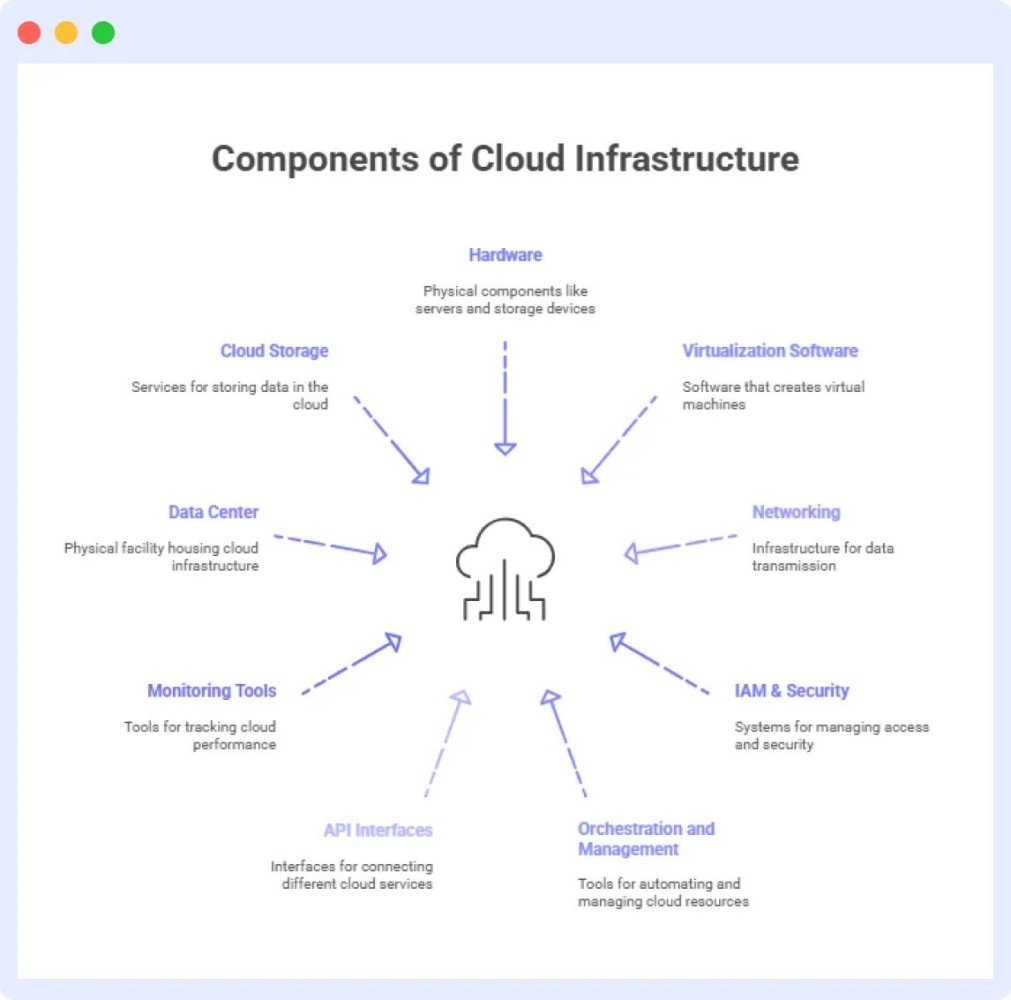
Inside Cloud Infrastructure: Core Components
Cloud infrastructure is built on several core components that work together to ensure smooth, secure, and scalable cloud computing. Below is an overview of the most important elements:
- Hardware: The foundation of any cloud environment, consisting of physical servers, storage systems, and networking devices. These are usually located in large-scale data centers.
- Virtualization Software:Enables multiple virtual machines (VMs) or containers to run on a single physical server, improving flexibility and resource efficiency. Examples include hypervisors like VMware and Hyper-V, as well as container runtimes such as Docker.
- Networking:Ensures reliable and secure connectivity across servers, storage, and users. This includes routers, switches, firewalls, and load balancers, often enhanced with Software-Defined Networking (SDN) for centralized control.
- Identity, Access Management & Security:Manages permissions and safeguards resources with tools like multi-factor authentication, encryption, and role-based access, ensuring compliance and data protection.
- Orchestration and Management:Automates deployment, scaling, and configuration of cloud services using tools like Kubernetes, Terraform, and Ansible, simplifying the management of complex systems.
- API Interfaces:Provide standardized methods for developers to provision, scale, automate, and integrate cloud services efficiently.
- Monitoring and Observability:Tracks system health, performance, and resource usage through tools such as Middleware, helping reduce downtime and optimize infrastructure decisions.
- Data Centers:The physical facilities that house servers, storage, power supply, cooling systems, and security measures to ensure availability and redundancy.
- Cloud Storage:Stores data on remote servers accessible online. Options include block storage, object storage, and file storage designed to be scalable, reliable, and ideal for backups and application data.
Together, these components form the backbone of modern cloud infrastructure. The exact mix and technologies may vary depending on the provider and the unique needs of the workload or application.
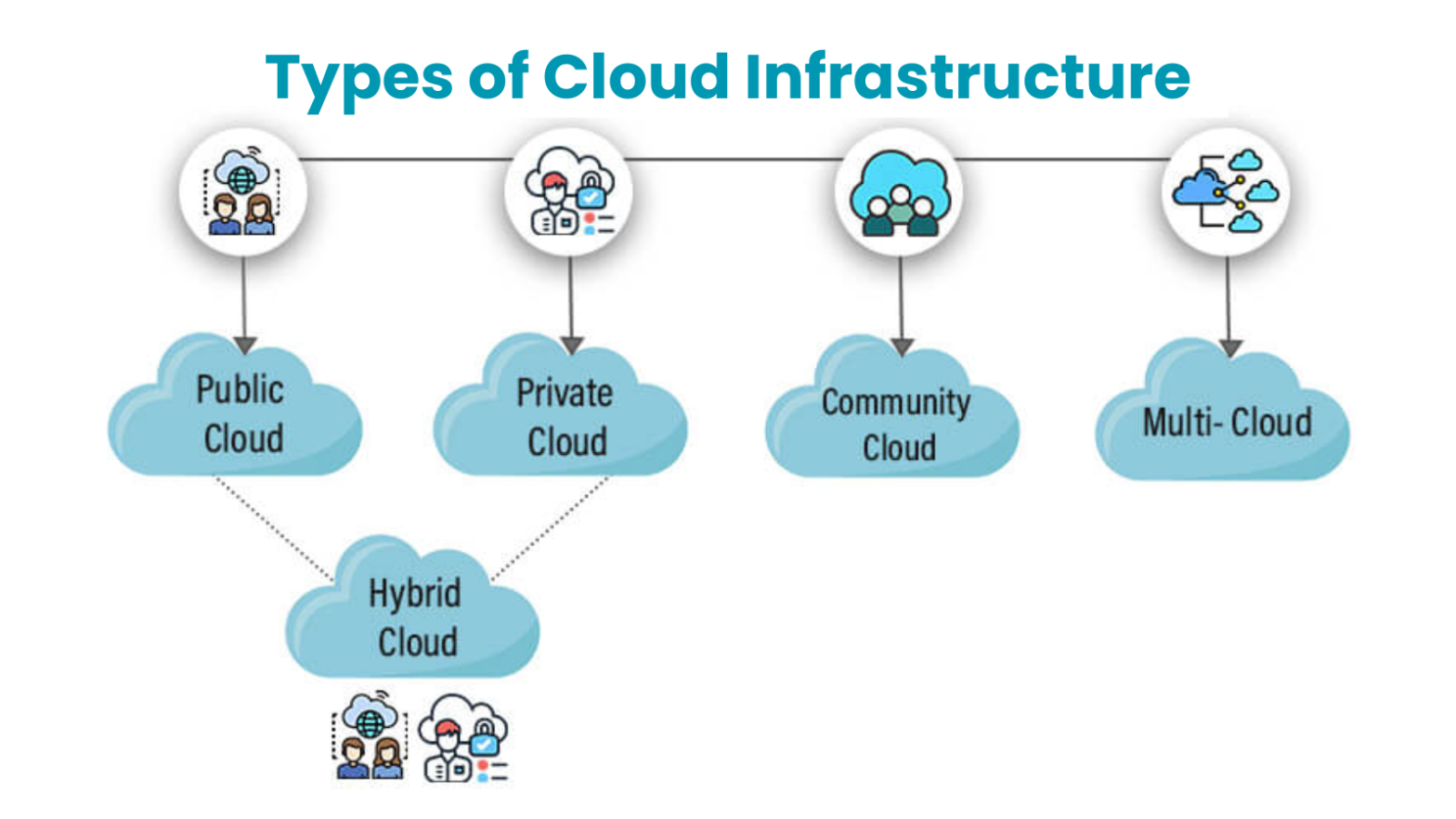
Types of Cloud Infrastructure
Cloud infrastructure comes in several forms, each offering unique benefits and use cases. The most common types include:
- Public Cloud:Managed by third-party providers like AWS, Microsoft Azure, or Google Cloud, public clouds make computing resources—servers, storage, and databases—available over the internet. They are highly scalable and cost-efficient but offer less control over the infrastructure.
- Private Cloud:Dedicated to a single organization, a private cloud can be managed internally or through a provider. It gives businesses greater control, security, and customization, though it is often more expensive and less flexible compared to public cloud solutions.
- Hybrid Cloud:Combining elements of both public and private clouds, a hybrid model allows organizations to balance cost-effectiveness and scalability with security and control. Workloads can be distributed across different environments depending on business needs.
- Community Cloud:Designed for a group of organizations with shared goals, requirements, or compliance needs, a community cloud is jointly managed and often operated by a third party. It fosters collaboration while sharing infrastructure costs.
- Multi-Cloud:A multi-cloud strategy leverages multiple providers like AWS, Azure, or Google Cloud to avoid vendor lock-in and gain flexibility. It lets businesses optimize workloads, boost resilience, and minimize downtime, though it adds complexity in management and monitoring.
Each of these models has strengths and limitations. The right choice depends on workload type, security considerations, compliance requirements, and budget.
Leading Cloud Infrastructure Providers
The cloud services market is dominated by a handful of major providers, each offering unique strengths and extensive service portfolios. Here are the top five:
- Amazon Web Services (AWS):As one of the most established and widely adopted platforms, AWS delivers a vast suite of services ranging from compute, storage, and databases to advanced IoT, analytics, and machine learning solutions. Known for its maturity and broad functionality, AWS is often seen as the benchmark in cloud infrastructure.
- Microsoft Azure:Azure offers a comprehensive cloud environment with strong integration into Microsoft technologies like Windows, .NET, Active Directory, and Office 365. Its seamless compatibility with enterprise IT systems makes it a preferred choice for businesses already invested in Microsoft’s ecosystem.
- Google Cloud Platform (GCP):Renowned for its data analytics and machine learning capabilities, GCP leverages Google’s global network to provide innovative solutions. It supports developers with services like Kubernetes Engine, serverless computing, and other cutting-edge tools.
- Alibaba Cloud:As the leading provider in Asia, Alibaba Cloud rivals global competitors with a robust range of services. Backed by the Alibaba Group, it has rapidly expanded its presence, particularly in regions where localized cloud solutions are in high demand.
- IBM Cloud:IBM Cloud focuses on enterprise-grade deployments, offering compute, storage, AI, IoT, and blockchain services with an emphasis on security and compliance. It is especially strong in hybrid cloud solutions, catering to industries with strict regulatory requirements.
While these providers dominate the global market, the right choice depends on regional availability, workload requirements, and organizational goals. Each provider has its own strengths, making it important for businesses to align their selection with specific needs.
Cloud Infrastructure in Action
Behind every cloud service lies a network of large-scale data centers managed by providers. These facilities are equipped with advanced hardware, storage systems, and high-performance computing resources designed to deliver secure, reliable, and scalable services.
Organizations and individuals do not need to invest in costly on-premise systems; instead, they subscribe to cloud services and pay only for the resources they use. This model gives them access to a powerful ecosystem where applications, devices, and systems seamlessly interact through virtualization, networking, and APIs.
From running everyday business applications to managing massive data workloads, cloud infrastructure ensures flexibility, efficiency, and on-demand scalability. Security protocols, identity management, and compliance frameworks are built into these systems to safeguard data while maintaining high availability.
In short, cloud infrastructure works by pooling global resources into centralized environments that clients can tap into over the internet, transforming how businesses deploy, scale, and manage IT operations.
5 Essential Requirements for Building Cloud Infrastructure
1. Evaluate Needs and Lay a Strong Foundation:Cloud adoption has no one-size-fits-all model. Before selecting a platform, assess your organization’s objectives and requirements. Consider factors such as scalability, security, and prior virtualization experience to decide whether dedicated servers, managed private clouds, or hybrid cloud models are the best fit.
2. Design Scalable Delivery Pipelines:A reliable delivery system is critical for efficient resource allocation. By configuring a robust load balancer, you can provide baseline resources for applications while ensuring seamless scaling and effective performance management as demands increase.
3. Establish a Robust Planning and Scaling Strategy:When designing your cloud environment, focus on smooth integration and communication across all components. Build a scalable framework that anticipates usage spikes and infrastructure stress. Also, ensure you have strategies to manage scaling impacts on application servers, databases, and network loads.
4. Adopt a Security-First Approach:Security should be embedded at every stage of implementation. Depending on your applications, apply the right protective measures, enforce compliance standards, and update frameworks regularly. Continuous monitoring ensures protection against evolving cyber threats.
5. Enable Monitoring and Observability from the Start:Effective cloud management requires strong visibility and automation. Define key performance indicators, collect actionable data, and use observability tools to gain insights. Incorporating AI can further help automate repetitive tasks, optimize decision-making, and streamline operations.
Benefits of Cloud Infrastructure
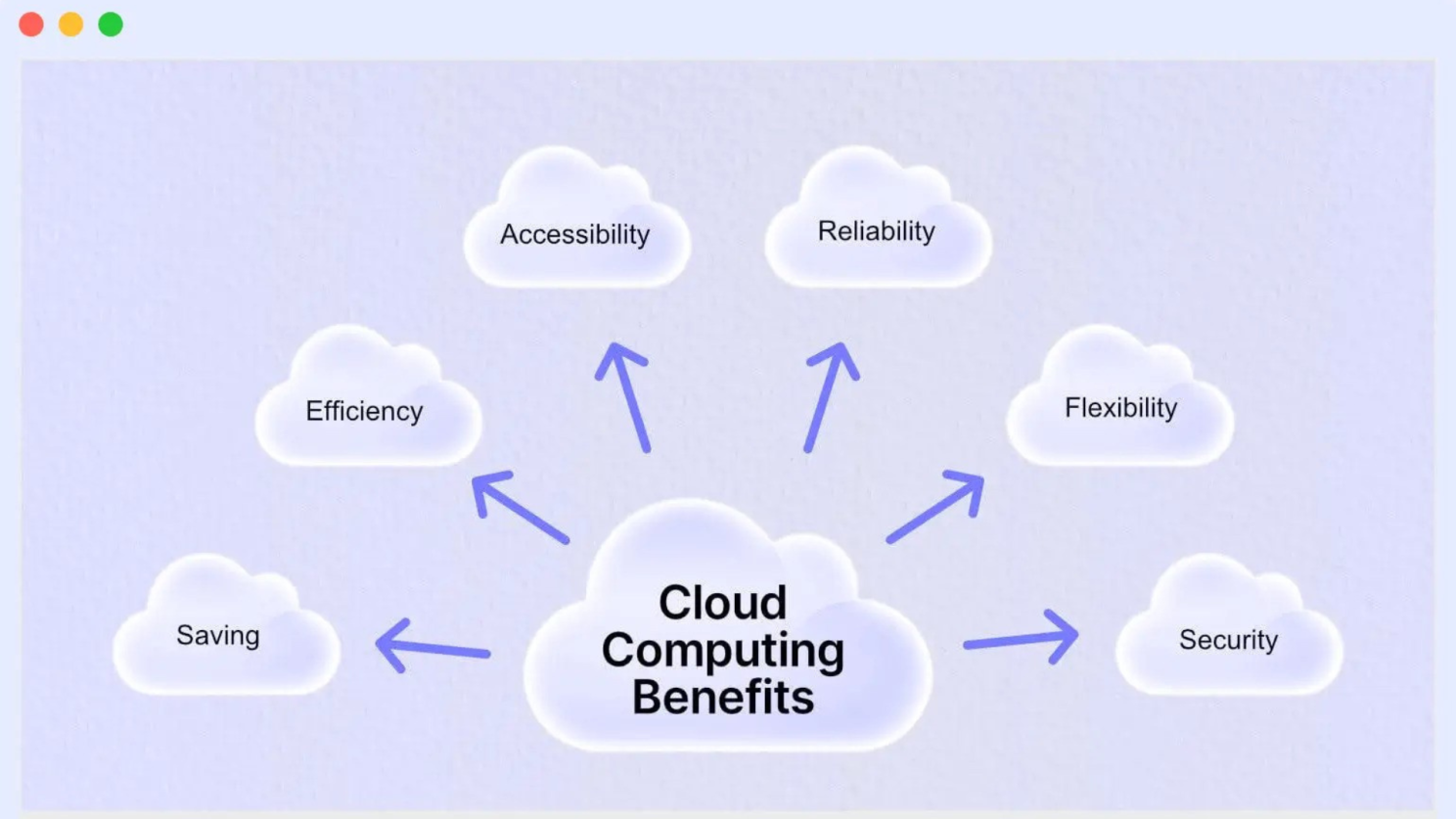
Cloud computing has revolutionized industries by enabling businesses to leverage powerful cloud infrastructure. Here are some key advantages it offers:
1. Convenient and Innovative Solutions:Cloud infrastructure provides access to the latest software, features, and automatic updates with enhanced security. Over 90% of organizations already use cloud technology, and many startups report significant improvements soon after adoption. Multi-cloud systems further allow businesses to select the best solutions tailored to their needs.
2. Simplified Collaboration and Remote Work:Cloud platforms make teamwork seamless, regardless of geographic boundaries. Employees can collaborate in real-time, making remote work easier and more productive. The pandemic highlighted the importance of cloud systems in maintaining business continuity during unexpected disruptions.
3. Flexibility and Scalability:By outsourcing IT infrastructure, businesses free up resources and gain the flexibility to scale operations quickly. Unlike traditional setups, cloud environments provide a wider range of features and on-demand scalability to match growth.
4. Automation and Efficiency:Cloud providers handle updates, maintenance, and optimization, ensuring high performance while reducing in-house IT costs. Automated software integration streamlines operations and allows teams to focus on innovation and growth.
5. Data Management and Analytics:Cloud servers manage massive datasets with ease, offering advanced analytics and faster processing. A multi-cloud approach also helps overcome modern challenges like data gravity, ensuring smarter business insights.
6. Disaster Recovery and Backup:Cloud services provide cost-effective, quick disaster recovery solutions, minimizing downtime. Studies show cloud users experience double the recovery efficiency compared to traditional setups.
7. Enhanced Security:Advanced encryption, authentication, and secure communication protocols make cloud systems highly secure, reducing risks of breaches while ensuring compliance with industry standards.
8. Continuous Updates & Innovation:Cloud infrastructure supports continuous delivery, integrating with DevOps tools for faster testing, deployment, and innovation cycles.
9. Scalable Storage:Organizations get virtually unlimited storage capacity, with customizable options to pay only for what they use.
10. Adaptability:Whether scaling, relocating, or transitioning to remote-friendly models, cloud solutions ensure seamless adaptability without disrupting business operations.
Drawbacks to Consider
While highly beneficial, cloud infrastructure also has some limitations:
·Less Control:over hardware and software since resources are managed by providers.
·Internet Dependency:can lead to downtime or performance issues during outages.
·Vendor Lock-in:makes switching providers costly and complex.
·Management Complexity:may require specialized expertise for optimization.
Cloud Infrastructure: What Lies Ahead
Cloud infrastructure is set to play an even more critical role in the digital transformation journey of businesses. One of its biggest advantages is that it allows organizations to access cutting-edge technologies without the heavy cost of building and maintaining in-house IT infrastructure.
In the future, cloud platforms will continue to evolve with greater emphasis onartificial intelligence, machine learning, and automation, enabling businesses to streamline operations and gain deeper insights from their data.Edge computingwill also expand, bringing data processing closer to the source for faster, low-latency performance especially vital for IoT and real-time applications.
Additionally,hybrid and multi-cloud strategieswill become more common as organizations look to balance flexibility, cost, and compliance requirements. Security and sustainability will remain at the forefront, with providers investing in greener data centers and stronger compliance frameworks.
Ultimately, cloud infrastructure will continue to evolve as the foundation of innovation, helping businesses of all sizes remain agile, scalable, and competitive in a rapidly changing technological landscape.

Your Strategic Edge with Inventiv Technology
At Inventiv Technology, we go beyond offering cloud solutions. We deliver trust, expertise, and innovation. Our team understands that every business has unique requirements, which is why we design cloud strategies tailored to your goals. From secure infrastructure to seamless scalability, we ensure that your organization gains maximum value from cloud adoption.
By partnering with us, you gain access to:
· Deep industry expertise and modern cloud practices
· Customized, future-ready infrastructure solutions
· End-to-end support with a focus on security and performance
Inventiv Technology is committed to empowering businesses with reliable cloud infrastructure that drives efficiency, growth, and long-term success.

Conclusion
Cloud infrastructure has become the backbone of digital transformation, enabling businesses to innovate faster, collaborate better, and operate more securely. While it brings countless opportunities, having the right partner is essential to truly unlock its potential.
With Inventiv Technology, your business is equipped not just with cloud solutions, but with a strategic partner dedicated to guiding you at every step of the journey. Together, we build resilient, scalable, and future-proof infrastructure that keeps your business ahead of the curve.
Embrace the cloud today to unlock a smarter, stronger, and future-ready tomorrow.
